 Pin It
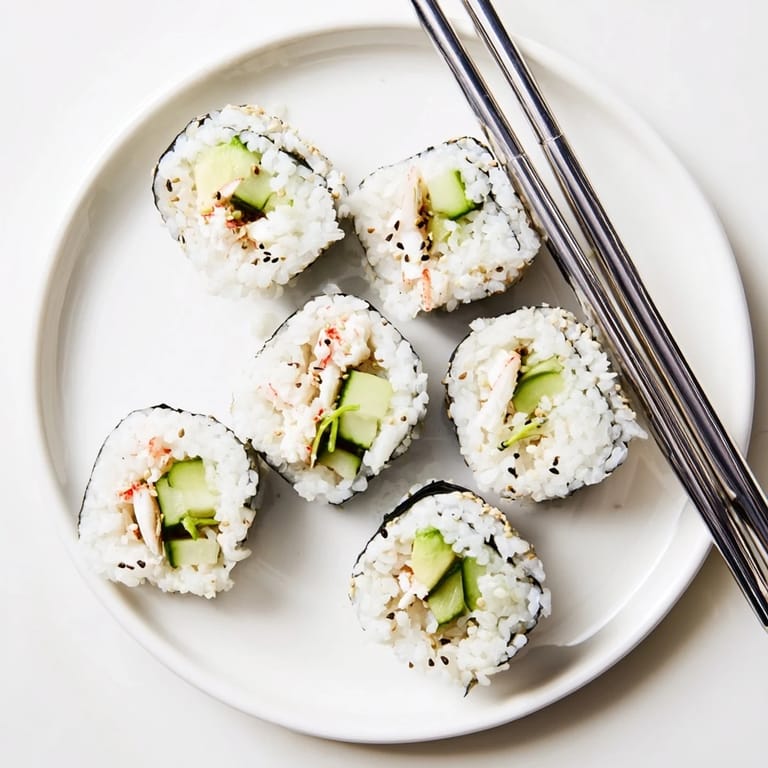
 The first time I attempted California rolls at home, my kitchen looked like a disaster zone with rice everywhere and nori sheets sticking to everything except where they should. My friend Sarah just laughed and said sushi making is supposed to be imperfectly beautiful. That evening, surrounded by scattered sesame seeds and failed attempts, we somehow created the most delicious messy rolls I'd ever tasted. Now when I make them, I think about how the best cooking adventures often start with chaos and end with something wonderful.
Last summer during a heatwave, I made these for dinner with my sister who had never tried homemade sushi. She was skeptical about the rice cooking process but absolutely lit up when she took her first bite of the finished roll. We sat at the counter with soy sauce splattered everywhere, eating piece after piece and talking about how something so simple could taste so luxurious.
Ingredients
- 1 ½ cups sushi rice: Short-grain rice is essential here because it becomes sticky when cooked, which is exactly what you need for the rice to hold everything together
- 2 cups water: The ratio matters for perfectly tender rice that's not mushy or undercooked
- 2 ½ tbsp rice vinegar: This gives the rice that distinctive tangy sweetness that makes sushi taste like sushi
- 1 tbsp sugar: Balances the vinegar's acidity and helps the rice achieve that glossy finish
- ¾ tsp salt: Enhances all the flavors and prevents the rice from tasting flat
- 120 g cooked crabmeat or imitation crab: Imitation crab works beautifully here and is much more budget friendly, but fresh crab is incredible if you can get it
- 1 ripe avocado: Look for one that gives slightly to pressure but isn't mushy, as it needs to hold its shape in strips
- ½ cucumber: English or Persian cucumbers work best because they have fewer seeds and thinner skin
- 2 tbsp mayonnaise: This adds creaminess that bridges the crab and vegetables together
- 4 sheets nori: Toasted nori sheets have a better flavor and crunch than untoasted ones
- 2 tbsp toasted sesame seeds: These add nuttiness and that classic restaurant style presentation
Tired of Takeout? 🥡
Get 10 meals you can make faster than delivery arrives. Seriously.
One email. No spam. Unsubscribe anytime.
Instructions
- Prepare the perfect sushi rice:
- Rinse your rice under cold water until it runs clear, then combine with water in a saucepan and bring to a boil. Cover tightly, reduce heat to low, and simmer for exactly 15 minutes before removing from heat and letting it rest covered for 10 minutes.
- Season and cool the rice:
- Mix rice vinegar, sugar, and salt in a small bowl until completely dissolved. Gently fold this mixture into your hot rice, being careful not to mash the grains, then let it cool to room temperature.
- Set up your rolling station:
- Cover a bamboo sushi mat with plastic wrap to prevent sticking, then place a sheet of nori shiny side down on the mat.
- Spread the rice foundation:
- With wet hands to prevent sticking, spread about ¾ cup of rice evenly over the nori, leaving a 2 cm border at the top edge. Sprinkle sesame seeds over the rice.
- Flip and fill:
- Carefully flip the nori so the rice side faces down, then arrange crab, avocado strips, and cucumber in a line along the bottom edge. Add a thin line of mayonnaise if you're using it.
- Roll with confidence:
- Use the mat to roll the sushi away from you, applying gentle pressure to create a tight cylinder. Seal the edge with a dab of water.
- Slice and serve:
- Use a sharp, damp knife to cut each roll into 6 pieces, wiping the knife clean between cuts. Serve immediately with soy sauce, pickled ginger, and wasabi.
 Pin It
 My niece once asked if we could have a sushi making birthday party instead of a cake, and honestly it was one of the most fun cooking experiences I've ever hosted. Seeing kids carefully arrange their avocado strips and proudly present their slightly lopsided rolls was absolutely heartwarming.
Getting The Rice Right
The difference between good and great California rolls comes down to the rice. After years of making sushi at home, I've learned that rushing the rice cooling process is the biggest mistake you can make. Take your time and let the rice reach room temperature naturally, spreading it in a wide shallow bowl if you're in a hurry. The texture should be sticky but each grain should still be distinct, not clumped together in a gooey mass.
Mastering The Roll
Don't be discouraged if your first few rolls look more like burritos than perfect sushi cylinders. The trick is applying even pressure as you roll, not squeezing too tightly which pushes the filling out the sides. I keep a small bowl of water nearby to dip my fingers in, as slightly damp hands handle the rice much better than dry ones. Remember that restaurant chefs have made thousands of rolls, and your first attempts don't need to be perfect to be delicious.
Perfect Presentation Every Time
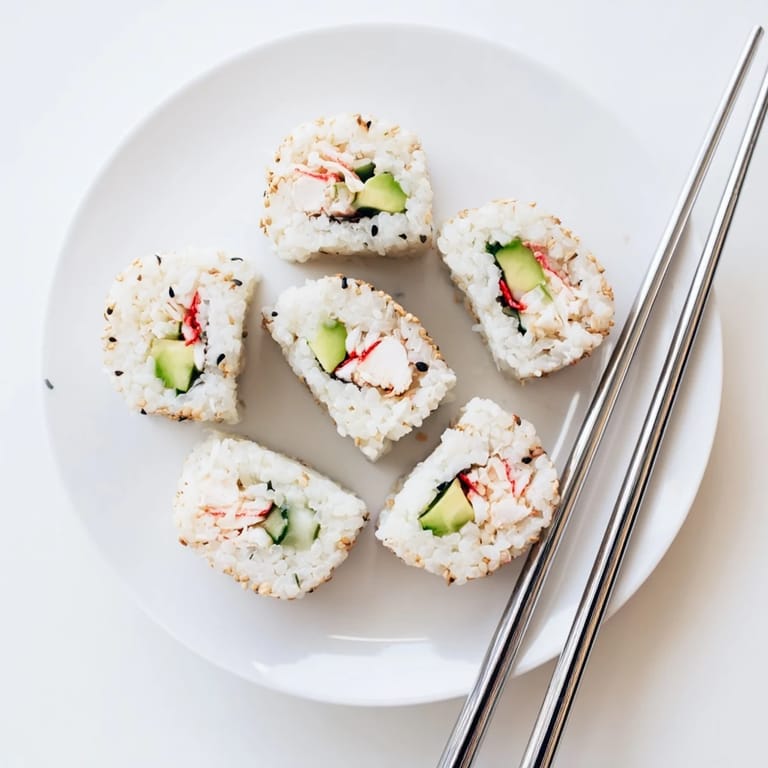
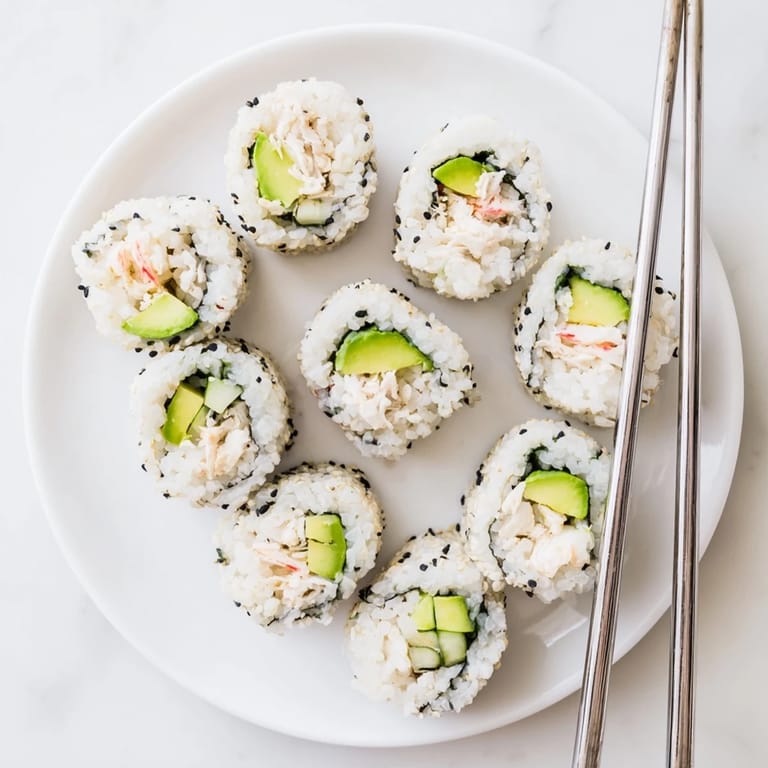
The way you slice your rolls makes a huge difference in how they look and taste. Use your sharpest knife and clean it with a damp cloth between every single cut. I like to cut rolls in half first, then cut those halves into thirds for the most uniform pieces. Arrange them on a plate with the prettiest side facing up, and don't forget to set out small bowls for soy sauce and individual portions of pickled ginger and wasabi.
- Toast your sesame seeds in a dry pan for 2 minutes before using
- Wrap leftover rolls tightly and eat within 24 hours
- Keep a small bowl of water nearby for dipping your hands
 Pin It
 There's something deeply satisfying about making sushi with your own hands, knowing exactly what went into every bite. These California rolls might take a little practice, but that first perfect roll is absolutely worth the effort.
Recipe FAQs
- → What type of crab works best for California rolls?
Real crab meat offers the best flavor and texture, but imitation crab (surimi) is commonly used and works beautifully. It's affordable, readily available, and has the right sweetness. If using fresh crab, cook and shred it before assembling.
- → Why do you flip the nori after spreading the rice?
Flipping creates the signature 'inside-out' California roll style with rice on the outside. This allows sesame seeds to coat the exterior and provides a pleasant texture contrast. The rice also helps hold the fillings securely in place during rolling.
- → How do I prevent the rice from sticking to my hands?
Keep a bowl of water nearby and wet your hands thoroughly before handling sushi rice. The moisture creates a barrier that prevents sticking. You can also lightly rub a tiny amount of neutral oil on your palms.
- → Can I make California rolls ahead of time?
For best results, assemble and slice California rolls within 1-2 hours of serving. The rice dries out and the nori becomes soggy if left too long. You can prep ingredients like slicing vegetables and seasoning rice up to 4 hours ahead, then roll just before eating.
- → What's the secret to cutting clean sushi pieces?
Use your sharpest knife and keep it damp with water or a wet cloth between cuts. Use a gentle sawing motion rather than pressing down. Cutting slowly and carefully prevents the roll from squishing and maintains the neat circular shape.
- → How do I know if my sushi rice is properly seasoned?
Properly seasoned sushi rice should have a subtle balance of sweet and tangy flavors. The vinegar mixture should be fully dissolved and evenly distributed. The rice should be glossy and slightly sticky but each grain should remain distinct, not mushy or clumped together.