 Pin It
 The steam rising from my first successful omelet still lingers in my memory. I had watched countless cooking shows where chefs made it look effortless, but my early attempts were either rubbery disasters or broken, scrambled messes. Then one rainy Sunday morning, I stopped rushing and started listening to the eggs themselves. That golden, tender fold changed everything about how I approach breakfast now.
My friend Sarah stumbled into my kitchen last winter, looking defeated after a terrible week. I stood by the stove, butter melting in the pan, and asked what she needed. She watched in silence as I folded the eggs around sharp cheddar and leftover ham. Something about that simple, warm plate made her shoulders drop two inches. Food does that sometimes.
Ingredients
- 4 large eggs: Room temperature eggs blend more smoothly and create that velvety texture were after
- 2 tablespoons milk or cream: This tiny addition makes all the difference between fluffy and tough
- 1 tablespoon unsalted butter: Butter handles medium heat beautifully and adds that classic richness
- 80 g grated cheese: Gruyère melts like a dream but sharp cheddar brings that nostalgic comfort
- 50 g cooked ham: Diced small so it warms through without overwhelming the delicate eggs
- 40 g diced bell pepper: Adds sweet crunch and bright color against the yellow
- 30 g chopped spinach: Fresh spinach wilts perfectly into the hot eggs
- 20 g sliced mushrooms: They cook quickly alongside the eggs, releasing earthy flavor
- Salt and black pepper: Season the eggs before cooking, it makes all the difference
- Fresh herbs: Chives bring mild onion brightness while parsley adds fresh color
Tired of Takeout? 🥡
Get 10 meals you can make faster than delivery arrives. Seriously.
One email. No spam. Unsubscribe anytime.
Instructions
- Whisk the eggs until frothy:
- Crack eggs into a bowl, add milk, salt, and pepper. Whisk vigorously until you see tiny bubbles forming on top. This air is what creates that fluffy texture.
- Melt the butter properly:
- Heat your nonstick skillet over medium heat until the butter bubbles gently. You want it melted and golden, not browned or smoking.
- Let the edges set:
- Pour in the egg mixture and tilt the pan to spread evenly. Walk away for exactly one minute. Resisting the urge to touch it lets those edges firm up beautifully.
- Add your fillings:
- Sprinkle cheese over the surface, then scatter in whatever fillings youve chosen. Work quickly so the eggs dont overcook while you layer.
- Lift and tilt:
- Gently slide your spatula under the edges, tilting the pan so raw egg flows underneath. Repeat around the perimeter until the top is barely set but still looks creamy.
- The final fold:
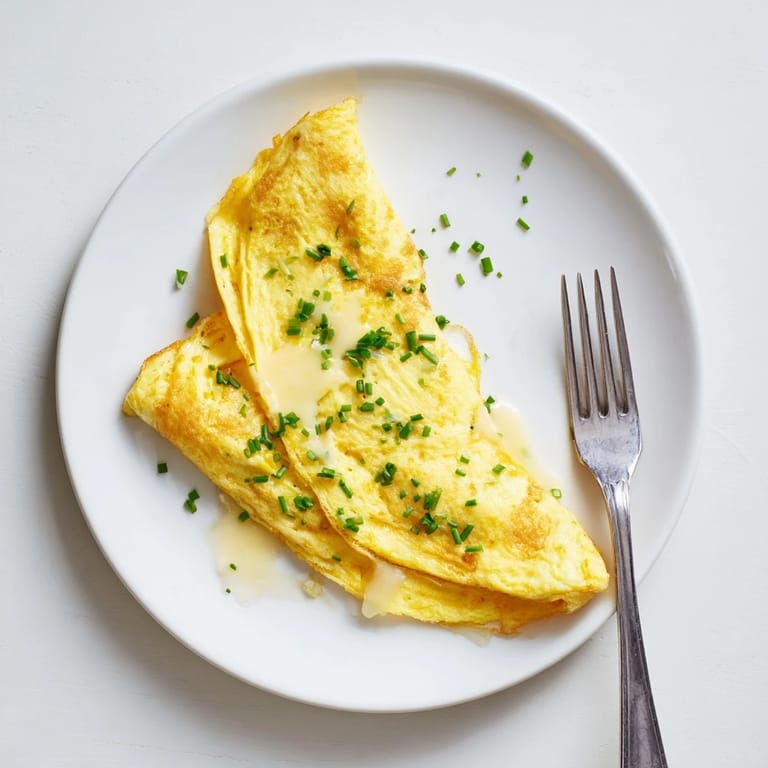
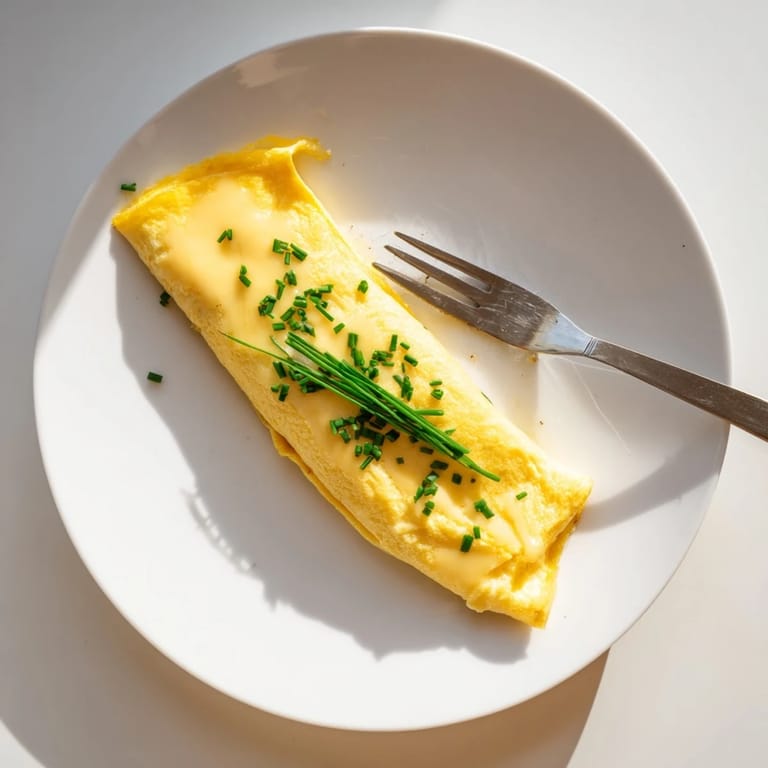
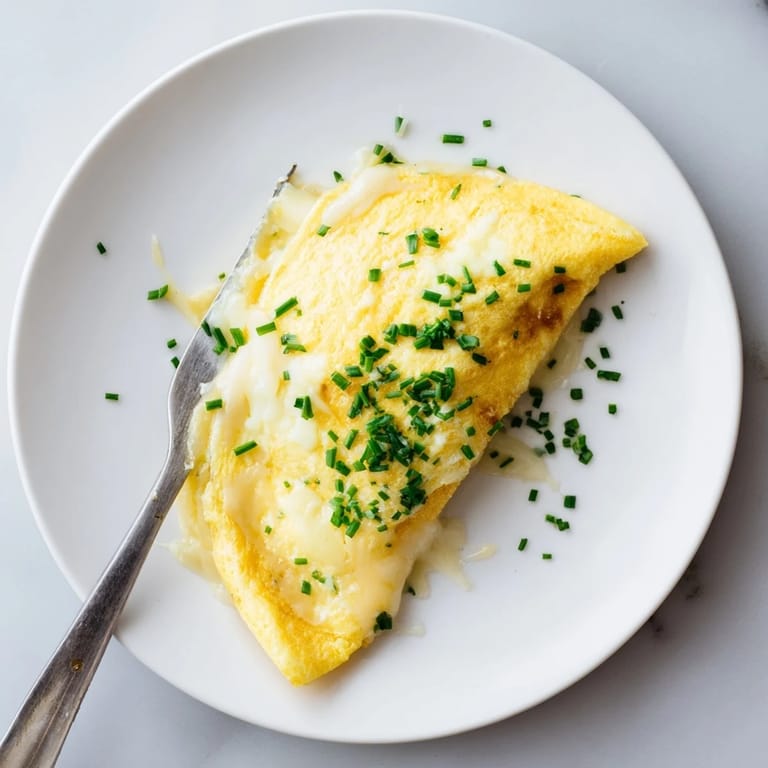
- Fold the omelet in half and let it cook for thirty seconds more. Slide it onto a warm plate, scatter fresh herbs on top, and serve immediately.
 Pin It
 This recipe became my go to when I moved into my first apartment and cooking felt overwhelming. Something about the rhythm of whisking, the smell of melting butter, the way eggs transform in the pan. It reminded me that even on chaotic days, some things in the kitchen still make sense.
The Secret to Perfect Eggs
Temperature matters more than most people realize. Cold eggs from the fridge take longer to set and can cook unevenly. Letting them sit on the counter for twenty minutes before you start makes a noticeable difference in how smoothly they blend and how evenly they cook.
Choosing Your Cheese
Not all cheeses melt the same way. Fresh mozzarella releases too much water and makes the omelet soggy, while aged parmesan stays grainy. Gruyère offers the best of both worlds with its nutty flavor and perfect melt, but a good sharp cheddar never disappoints if you want something more familiar.
Timing Everything Right
Have your fillings prepped and your cheese grated before you turn on the stove. Omelets wait for no one. Once those eggs hit the pan, everything needs to happen fast. Mise en place sounds fancy but it just means not scrambling around for ingredients while your dinner overcooks.
- Warm your plate in the oven while you cook so the omelet stays hot longer
- Pregrate your cheese the night before for an even faster morning breakfast
- Clean your skillet immediately after use, it makes washing up so much easier
 Pin It
 Some mornings call for elaborate breakfasts, but most days just want something simple done well. This omelet is that thing.
Recipe FAQs
- → What makes a cheese omelet fluffy?
Whisking eggs thoroughly with milk or cream creates air pockets that result in fluffiness. Cooking over medium heat prevents overcooking and maintains a tender texture.
- → Which cheese works best for omelets?
Gruyère offers excellent melting properties with nutty flavor. Cheddar provides sharpness, while Emmental melts smoothly. Any good melting cheese works beautifully.
- → Can I prepare this omelet ahead of time?
Omelets taste best served immediately while hot and creamy. However, you can whisk eggs and grate cheese in advance. Cook just before eating for optimal texture and flavor.
- → How do I prevent my omelet from sticking?
Use a quality nonstick skillet and adequate butter. Heat should be medium—too high causes sticking. Tilt the pan to distribute butter evenly before adding eggs.
- → What vegetables can I add to my omelet?
Bell peppers, spinach, mushrooms, onions, and tomatoes work well. Sauté vegetables slightly before adding to prevent excess moisture from making the omelet watery.
- → Is this omelet suitable for vegetarians?
Yes, when prepared without ham. The base version contains only eggs, dairy, and cheese, making it naturally vegetarian-friendly.