 Pin It
 My cousin called me three weeks before her graduation with a request that made my heart skip: would I make her cake? Not just any cake, but something that would look as impressive as her accomplishment felt. I found myself standing in my kitchen on a humid afternoon, thinking about how a simple vanilla sponge could become something worthy of that moment, and suddenly I understood why she'd asked. The magic wasn't in complexity—it was in caring enough to get the details right.
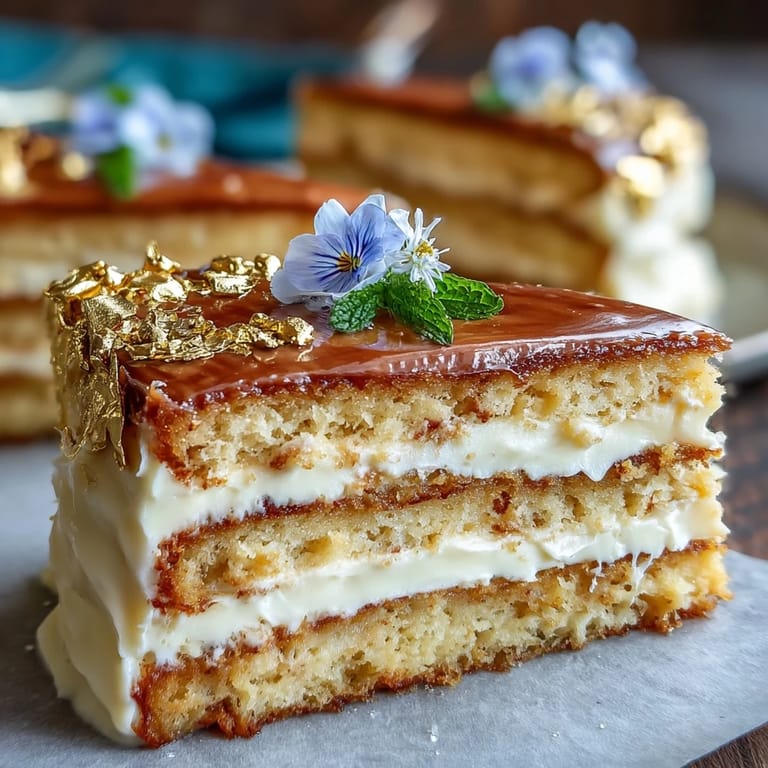
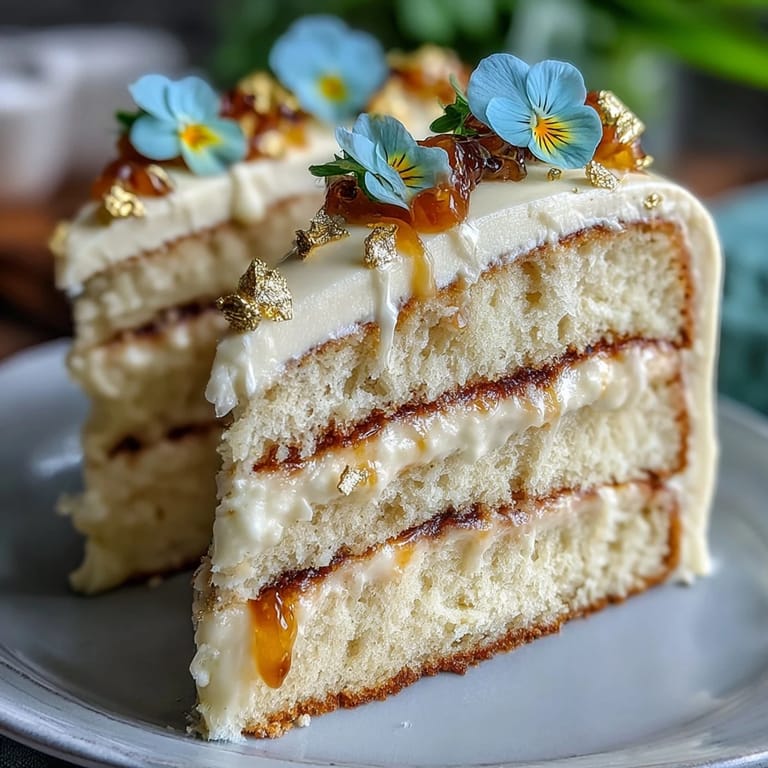
I still remember my hands shaking slightly as I carefully placed the first edible pansy on the frosted cake. My cousin stood beside me in the kitchen, watching, and when I stepped back to look at what we'd created together, she got teary. That cake became the centerpiece of her party, but more than that, it became proof that she was worth the effort—and somehow, so was I for trying.
Ingredients
- All-purpose flour (2 1/2 cups): The foundation of a tender crumb; sifting it beforehand prevents lumps and gives the cake an almost cloud-like texture.
- Baking powder (2 1/2 tsp): Fresh baking powder is crucial—if it's been sitting open for months, your cake will fall flat before it even bakes.
- Unsalted butter (1 cup for cake, 1 1/2 cups for buttercream): Room temperature is non-negotiable; cold butter won't incorporate properly and will leave you with a grainy, separated mess.
- Granulated sugar (2 cups for cake, 1 1/4 cups for buttercream): Sugar does more than sweeten; it helps create that light, fluffy structure when creamed with butter.
- Large eggs (4 for cake, 5 for buttercream): Room temperature eggs mix more evenly and create a more stable emulsion in the buttercream.
- Vanilla extract (1 tbsp for cake, 2 tsp for buttercream): Use real vanilla; the artificial version won't give you that subtle, sophisticated flavor.
- Whole milk (1 cup): The acidity in milk helps activate the baking powder and tenderizes the crumb beautifully.
- Edible gold leaf: Handle with a soft brush, never your fingers, or the delicate sheets will tear and lose their shine.
- Edible flowers: Source these from specialty food shops or trusted online suppliers; verify they're pesticide-free and actually meant to eat.
Tired of Takeout? 🥡
Get 10 meals you can make faster than delivery arrives. Seriously.
One email. No spam. Unsubscribe anytime.
Instructions
- Heat your oven and prepare the pans:
- Preheat to 350°F (175°C) and line three 8-inch round pans with parchment paper; this prevents sticking and makes turning out the layers worry-free.
- Combine dry ingredients:
- Whisk flour, baking powder, and salt together and set aside; this distributes the leavening evenly so your cake rises uniformly.
- Cream butter and sugar:
- Beat them together for about 3 minutes until the mixture looks pale and fluffy, almost like frosting; this incorporates air that helps the cake rise.
- Add eggs and vanilla:
- Add eggs one at a time, beating well between additions so each one fully incorporates; add vanilla and mix until just combined.
- Alternate wet and dry:
- Add the flour mixture and milk in three alternations, starting and ending with flour; overmixing at this stage develops gluten and makes the cake tough, so be gentle.
- Fill and bake:
- Divide batter evenly among pans and smooth the tops so they bake evenly. Bake 28–32 minutes until a toothpick inserted in the center comes out clean or with just a crumb or two.
- Cool properly:
- Let cakes rest in their pans for 10 minutes (they continue cooking slightly), then turn them out onto wire racks to cool completely; warm cakes are fragile and will crack if frosted too soon.
- Create Swiss meringue buttercream:
- Whisk egg whites and sugar over simmering water, stirring constantly, until the mixture reaches 160°F and feels warm and smooth, about 5 minutes; this heats the eggs safely.
- Whip the meringue:
- Transfer to a stand mixer and beat on high until stiff peaks form and the bowl cools to room temperature, about 8–10 minutes; this usually takes longer than you think, so be patient.
- Add butter gradually:
- With the mixer on medium, add butter a few cubes at a time, waiting for each addition to fully incorporate before adding the next; if the buttercream looks broken or soupy, it means the temperature isn't quite right—keep mixing and it will come together.
- Finish and assemble:
- Add vanilla and a pinch of salt, then mix until smooth and silky. Layer the cooled cakes with buttercream between each, starting with a thin crumb coat (which catches stray crumbs), chilling for 20 minutes, then applying a final smooth layer.
- Apply gold leaf:
- Using a soft food-safe paintbrush, gently brush edible gold leaf onto sections of the frosted cake in your chosen pattern; the delicate sheets adhere to the buttercream without any adhesive needed.
- Arrange flowers and finish:
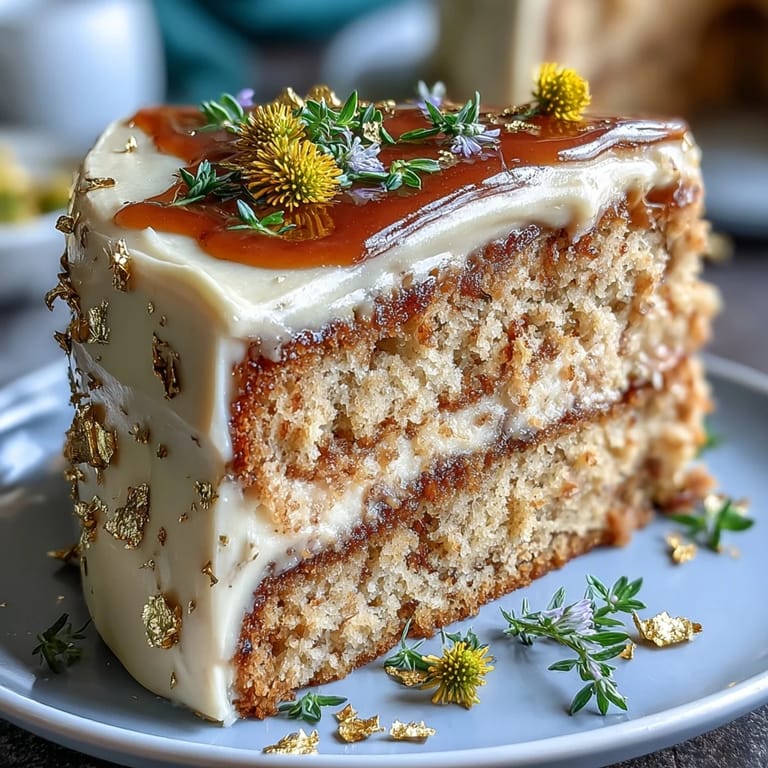
- Place edible flowers artfully on the cake, nestling them into the frosting or positioning them in clusters; add a gold ribbon around the base if you want an extra touch of elegance.
 Pin It
 A few days after the party, my cousin sent me a photo from her phone—a close-up of the cake with golden light hitting the gold leaf, making it glow. She wrote, 'People are still talking about this.' I realized then that celebrations aren't just about tasting something delicious; they're about feeling valued through the care someone took to create something beautiful.
Choosing Your Edible Flowers
Not every flower is safe to eat, which is something I learned the hard way by almost using roses from a supermarket bouquet. Pansies, violets, and food-grade roses are reliable choices, but you need to buy them from sources that grow specifically for consumption. Farmers markets with specialty vendors and online purveyors who cater to bakers are your safest bets. The difference between a flower grown for decoration and one grown for eating isn't always obvious to the eye, but it matters tremendously for both safety and flavor.
The Science Behind Swiss Meringue Buttercream
Swiss meringue buttercream intimidates people, but it's actually more stable than American buttercream because the eggs are safely heated. The real trick is understanding that this buttercream is temperature-sensitive—if your kitchen is too warm or the mixture hasn't cooled enough, the butter won't incorporate and everything feels broken. I've learned to keep ingredients cool, work methodically, and trust that what looks like a disaster at minute seven will be silk by minute eleven. It's one of those kitchen lessons where patience and faith matter more than speed.
Decorating with Confidence
The buttercream base is your canvas, and unlike delicate decoration techniques, gold leaf and flowers are forgiving in their placement. I've found that odd numbers of flowers tend to look more natural than even rows, and varying the sizes of blooms creates depth. If you're nervous, practice on a sheet of parchment first, arranging flowers there before committing to the cake. Remember that a few small imperfections actually make a homemade cake more charming—it shows someone cared enough to make it from scratch.
- Use a turntable when frosting if you have one; it makes achieving smooth, even layers infinitely easier.
- Chill the frosted cake for at least 20 minutes before adding flowers so they don't sink or shift.
- Gold leaf catches the light and makes your cake photographs beautifully, so don't be shy with it if you're planning to celebrate in a way that involves photos.
 Pin It
 This cake exists to celebrate someone's achievement, so approach it as a love letter rather than a test of your baking skills. Every small care you take—tempered eggs, gentle mixing, thoughtful flowers—becomes part of the gift.
Recipe FAQs
- → What makes Swiss meringue buttercream different?
Swiss meringue buttercream is silky and light, made by gently heating egg whites and sugar before whipping into stiff peaks, then blending in butter for a smooth texture.
- → How do I safely apply edible gold leaf?
Use a food-safe paintbrush to delicately lift and place the gold leaf onto the surface, working gently to prevent tearing.
- → Which flowers are safe to use for decoration?
Choose only edible flowers grown without pesticides, like pansies, violets, and roses, ensuring they are safe for consumption.
- → Can I prepare parts of this in advance?
Yes, the sponge layers can be baked ahead and wrapped tightly. Buttercream is best fresh but can be made a day prior and refrigerated.
- → How do I achieve even layering and crumb coating?
Use an offset spatula to spread buttercream thinly between layers and chill the cake before applying the final smooth coat for a polished look.