 Pin It
 My neighbor Maria handed me a steaming bowl of sopa azteca one October afternoon, and I understood immediately why this soup has survived centuries of Mexican kitchens. The broth was the color of sunset, complex and smoky, but what grabbed me was the texture—those fried tortilla strips softening just enough in the heat while staying rebellious and crispy at the edges. She laughed when I asked for the recipe, saying every family guards theirs like a secret, but the technique itself is pure logic wrapped in comfort.
I made this for friends on a rainy Sunday and watched their faces shift as they tasted it—that moment when a soup stops being just lunch and becomes a small event. The kitchen smelled like toasted chiles and something ancient, and someone asked if I'd been cooking this my whole life. The truth is simpler: good technique makes even a first attempt feel like you've known this dish forever.
Ingredients
- Vegetable oil: You need enough to fry the tortilla strips until golden, so don't skimp—about 1 inch in the skillet makes all the difference between crispy and soggy.
- White onion: The foundation of almost every Mexican sauce, it sweetens as it cooks and builds the base that everything else sits on.
- Garlic cloves: Three cloves minced fine, they'll melt into the broth and add quiet depth without overpowering the chiles.
- Roma tomatoes: Their meatiness and lower water content make them perfect here; watery tomatoes will dilute the broth's character.
- Dried pasilla and guajillo chiles: Pasillas bring a deep, almost chocolatey smokiness while guajillos add brightness and fruity notes—together they create the soul of this soup.
- Vegetable broth: Five cups total, and honestly, a good quality broth matters because the chiles and tomatoes need something worthy to meld with.
- Oregano and cumin: Dried oregano is non-negotiable here, and the cumin should be ground fresh if you have it, adding earthiness that ties everything together.
- Corn tortillas: Eight tortillas sliced thin and fried until they shatter when you bite them—this is where textural contrast lives in the bowl.
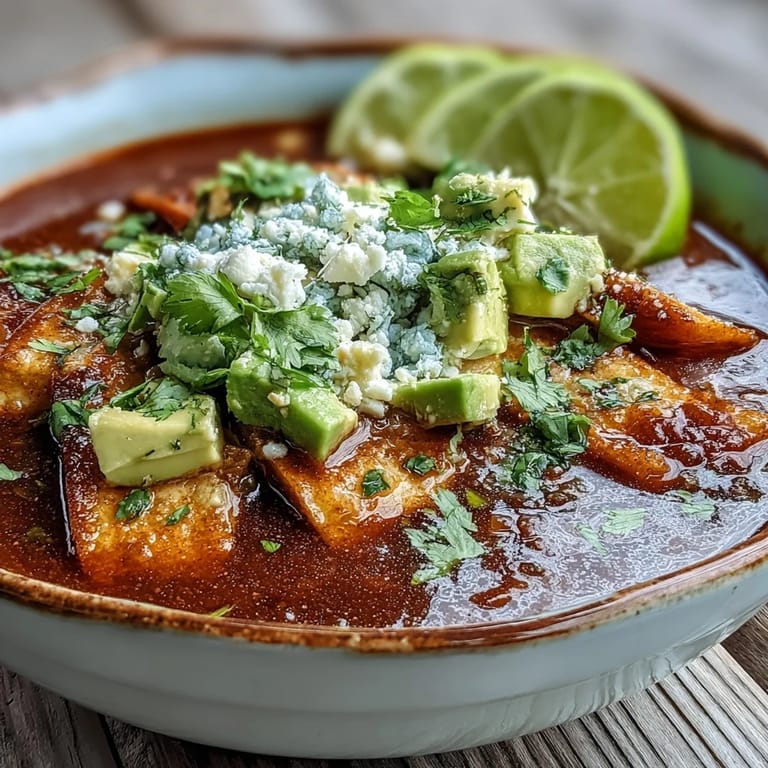
- Panela cheese: Mild and slightly crumbly, it doesn't melt into the broth but instead floats like clouds, providing cooling creaminess without heaviness.
- Avocado: A ripe one, diced just before serving so it stays bright green and buttery rather than oxidized and dull.
- Fresh cilantro: Not an afterthought—its peppery freshness cuts through richness and reminds your palate that this is a living, breathing dish.
- Crema and lime: Optional crema adds luxury, while lime wedges give everyone control over how much brightness hits their spoon.
Tired of Takeout? 🥡
Get 10 meals you can make faster than delivery arrives. Seriously.
One email. No spam. Unsubscribe anytime.
Instructions
- Start the base with oil and aromatics:
- Heat 2 tablespoons of oil in a large pot over medium heat. Once shimmering, add your chopped onion and let it cook undisturbed for about 3 minutes until it turns translucent and soft—you'll smell the sweetness rising up. Add the minced garlic and cook just 1 minute more, stirring constantly so it doesn't catch and turn bitter.
- Build flavor with tomatoes:
- Add your chopped Roma tomatoes to the pot and let them break down for about 5 minutes, stirring occasionally. They'll release their juice and start to collapse, creating a loose, fragrant base that's ready for the chiles.
- Toast the dried chiles:
- While the tomatoes soften, take a separate dry skillet and toast your stemmed and seeded pasilla and guajillo chiles over medium heat for just 1 to 2 minutes. You want them fragrant and slightly darkened—not charred, which turns them bitter and ruins everything.
- Blend it into silk:
- Transfer the cooked tomatoes, onions, garlic, and toasted chiles into a blender with 1 cup of vegetable broth. Blend on high until completely smooth, with no visible chile skin or tomato chunks remaining—this creates the velvety texture the soup needs.
- Simmer and season:
- Return the blended mixture to the pot and add the remaining 4 cups of broth, then stir in oregano, cumin, salt, and pepper. Bring to a boil, then drop the heat and let it simmer gently for 15 minutes so the flavors marry and mellow. Taste it and adjust salt or spices—this is your moment to make it perfectly yours.
- Fry the tortillas until golden:
- While the broth simmers, heat about 1 inch of oil in a separate skillet over medium-high heat until a tortilla strip sizzles immediately when it hits the oil. Working in batches so you don't overcrowd the pan, fry the tortilla strips for 1 to 2 minutes per batch until they're golden and crisp, then drain them on paper towels where they'll stay crunchy.
- Assemble and serve:
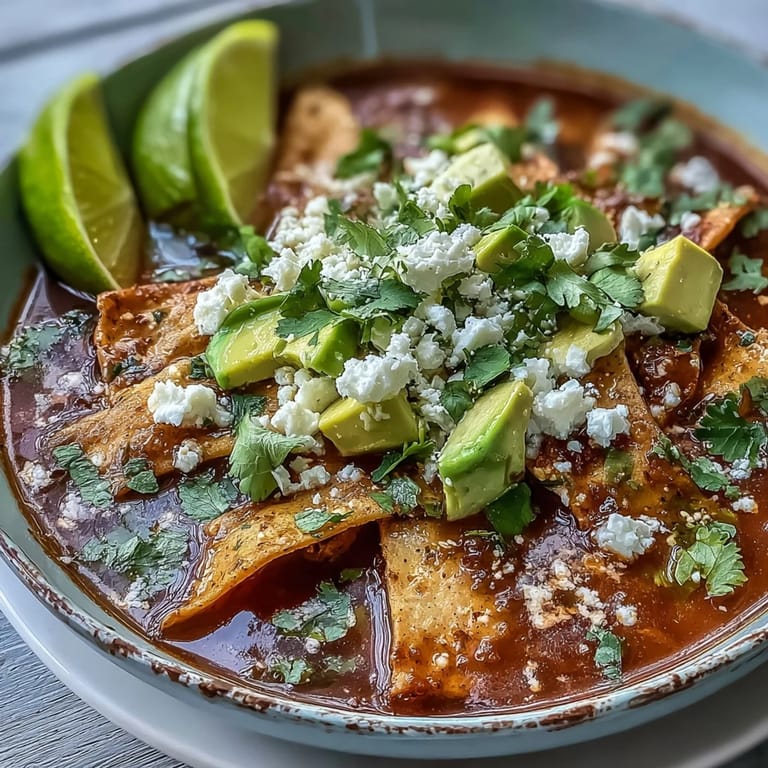
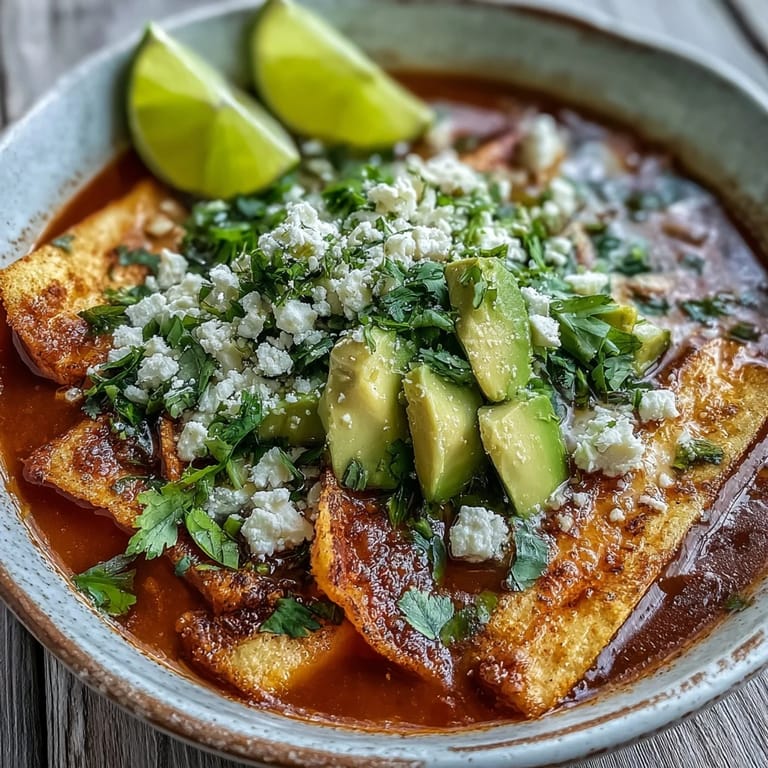
- Divide the crispy tortilla strips among four bowls, then ladle the hot broth over them generously. Top each bowl with diced avocado, panela cheese, fresh cilantro, and a drizzle of crema if you're using it, then serve immediately with lime wedges so everyone can brighten their own bowl.
 Pin It
 There's something about watching someone pour lime juice into their bowl and stir in avocado and cilantro that reminds you why people cook—it's not about feeding people, it's about giving them choices and control. This soup transforms in that moment from something you made into something they're creating for themselves.
The Magic of Dried Chiles
The first time I used pasilla and guajillo chiles together, I understood why Mexican cooks have relied on them for generations. Pasillas are almost black when dried, and they taste like they've spent time in an oak cabinet—deep, slightly sweet, with smoke running through every fiber. Guajillos are brighter, almost mahogany colored, with hints of berries and mild heat that doesn't dominate but enriches. When you blend them together with tomatoes, something unexpected happens: they stop tasting like individual ingredients and become one unified flavor that's both ancient and impossible to name.
Why the Tortilla Strips Matter Most
I learned early on that you can't just crumble up leftover tortillas and call them tortilla strips. You need to cut them thin and fry them fresh, because they undergo a transformation in hot oil—the outside becomes crispy and shattered while the inside stays tender, and that contrast is the entire reason people love this soup. When that hot broth hits the strips, they soften just slightly at their edges while their centers hold firm, and every spoonful becomes textured and interesting instead of uniform and soft.
Building Bowls That Taste Personal
The beauty of sopa azteca is that it's a foundation waiting for your choices. Some people heap on the panela cheese and skip the crema, while others do the opposite. I've watched people add so much cilantro that it nearly disguises the soup, and others who are restrained with it, letting the broth shine. The avocado is where people show their true preferences—some slice it thick, others dice it into pieces so small they almost dissolve into the warmth, and both versions are exactly right.
- Add a chipotle chile in adobo to the blender if you want genuine smokiness and a whisper of heat that builds with each spoonful.
- Lime is not optional—it's the final seasoning that wakes up every other flavor and makes the soup feel balanced and bright.
- Serve everything at the table so people can layer their own bowl and eat it while it's hot, because a bowl of sopa azteca is only perfect in that first moment.
 Pin It
 This soup arrives at your table as an argument between warmth and crispness, richness and brightness, tradition and the choices you make in that moment. Once you've made it, you'll understand why people pass the recipe down like something precious.
Recipe FAQs
- → Can I make the broth ahead of time?
Yes, the broth can be prepared up to 3 days in advance and stored in the refrigerator. Reheat before serving and fry the tortilla strips fresh to maintain their crispness.
- → What can I substitute for dried pasilla and guajillo chiles?
You can use other dried chiles like ancho or New Mexico chiles. For a spicier version, add dried arbol chiles. Adjust quantities to match your heat preference.
- → How do I keep the tortilla strips crispy?
Fry the tortilla strips until deeply golden and drain them well on paper towels. Add them to bowls just before serving and pour the hot broth over them immediately.
- → Can I bake the tortilla strips instead of frying?
Yes, brush tortilla strips lightly with oil and bake at 375°F (190°C) for 10-12 minutes, flipping halfway through, until crispy and golden brown.
- → What cheese works best if I can't find panela?
Queso fresco, fresh mozzarella, or feta cheese are excellent substitutes. Choose a mild, fresh cheese that won't overpower the smoky broth flavors.
- → Is this soup spicy?
The heat level is mild to medium. Pasilla and guajillo chiles provide depth and smokiness rather than intense heat. Add chipotle or serrano peppers if you prefer more spice.