 Pin It
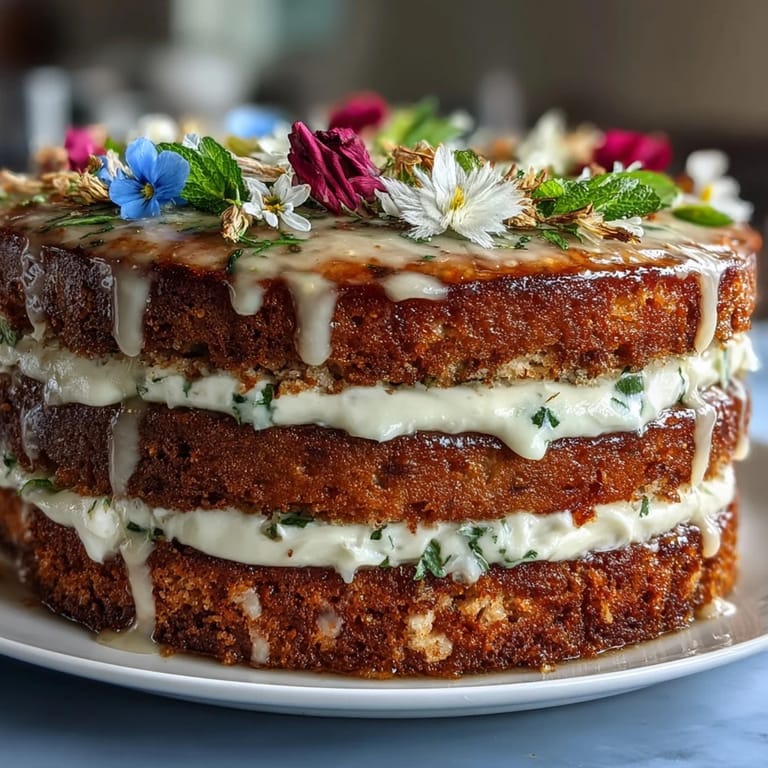
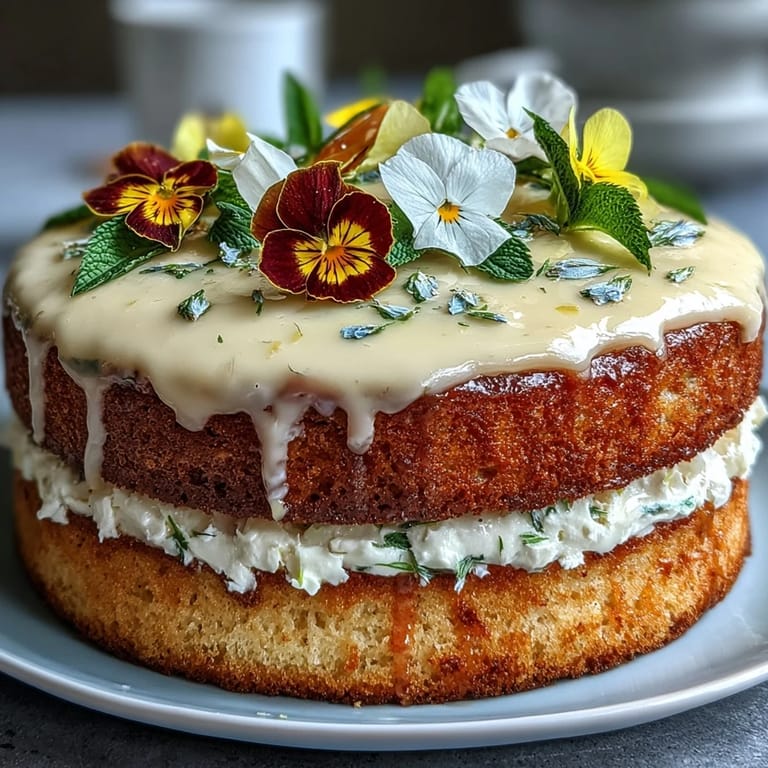
 The first time I decided to make a spring cake adorned with pressed flowers, sunlight poured in through my kitchen window with such intensity I felt compelled to open every drawer and let the fresh air swirl around. The idea was inspired by a cookbook left open on the counter, its pages decorated with bright floral cakes that practically asked to be baked. As I grated lemon zest and dusted flour on my apron, the room filled with a scent of citrus and anticipation. It wasn't just about dessert that afternoon—it felt like making an edible centerpiece for the table. The flowers, delicate and vibrant, seemed to whisper their own story as I arranged them atop the soft whipped cream.
I remember serving this cake at a garden brunch where the chatter paused and someone reached out to gently touch a petal, uncertain if it was real or art. That moment taught me how food can create small wonder for people you care about. The cake itself became a conversation starter; even the icing swirls sparked discussion about whether anyone dared to disturb them. My friend Julia confessed she hadn't tasted lemon curd until that day—now she asks for it every spring. It felt like the cake had its own way of making memories, even after the last crumb disappeared.
Ingredients
- Unsalted butter: Softened butter helps the sponge rise beautifully and gives it a fine, tender crumb; use room temperature for the best texture.
- Granulated sugar: Whipping it thoroughly with butter is what creates that light, airy base—don't rush this part.
- Eggs: Room temperature eggs blend seamlessly, yielding a smoother cake batter; I always leave mine out for at least 30 minutes.
- Vanilla extract: Adds warmth and rounds out the lemon notes; I splash a little extra for good measure.
- All-purpose flour: I sift it to avoid lumps and ensure the sponge turns out as soft as possible.
- Baking powder: Gives a gentle lift, making the layers rise evenly; measure precisely for a perfect structure.
- Fine sea salt: Balances flavors and enhances the citrus; avoid coarse salt, as it won't dissolve as well.
- Whole milk: Room temperature milk helps keep everything light and fluffy; cold milk can toughen the cake.
- Zest of lemon: The zest provides aromatic brightness; always zest onto a plate so none escapes.
- Eggs (for lemon curd): Their richness thickens the curd—start whisking before any heat for smoothness.
- Granulated sugar (for curd): Dissolves quickly and forms a glossy, tangy filling; I stir until grains vanish.
- Freshly squeezed lemon juice: Only fresh juice gives that lively, puckering tang; bottled juice is never as good.
- Lemon zest (for curd): Adds intensity without extra tartness; a microplane works best.
- Unsalted butter (for curd): Melts in at the end and transforms the curd into something velvety-smooth.
- Heavy cream: Whipped cold, it creates fluffy swirls perfect for pressing flowers into; don't over-whip.
- Powdered sugar: Sweetens the cream subtly and dissolves instantly, so no grittiness remains.
- Pressed edible flowers: Pansies, violets, nasturtiums, or organic rose petals add a whimsical touch—make sure they're truly edible and pesticide-free.
Tired of Takeout? 🥡
Get 10 meals you can make faster than delivery arrives. Seriously.
One email. No spam. Unsubscribe anytime.
Instructions
- Prep the pans:
- Grease two 8-inch cake pans thoroughly, then line them with parchment paper; I like the crinkle as the paper settles in each pan.
- Cream and mix:
- Beat butter and sugar until pale and soft, then add eggs one at a time, listening for the gentle thump as each yolk lands; stir in the vanilla and fragrant lemon zest.
- Combine dry and wet:
- In a separate bowl, whisk flour, baking powder, and salt; add these gradually to your wet mixture, alternating with milk, blending until the batter just comes together.
- Bake the cake:
- Pour the batter evenly into both pans and bake for 25–30 minutes, until the kitchen smells lemony and a toothpick comes out clean; let cool in the pans before turning onto a wire rack.
- Make the lemon curd:
- In a heatproof bowl, whisk eggs, sugar, juice, and zest; place over simmering water and stir nonstop until thickened—about 10 minutes—then whisk in butter until glossy and smooth.
- Whip the cream:
- With chilled cream and powdered sugar, beat to stiff peaks; the mixture should form soft mountains that hold their shape, never gritty.
- Assemble the cake:
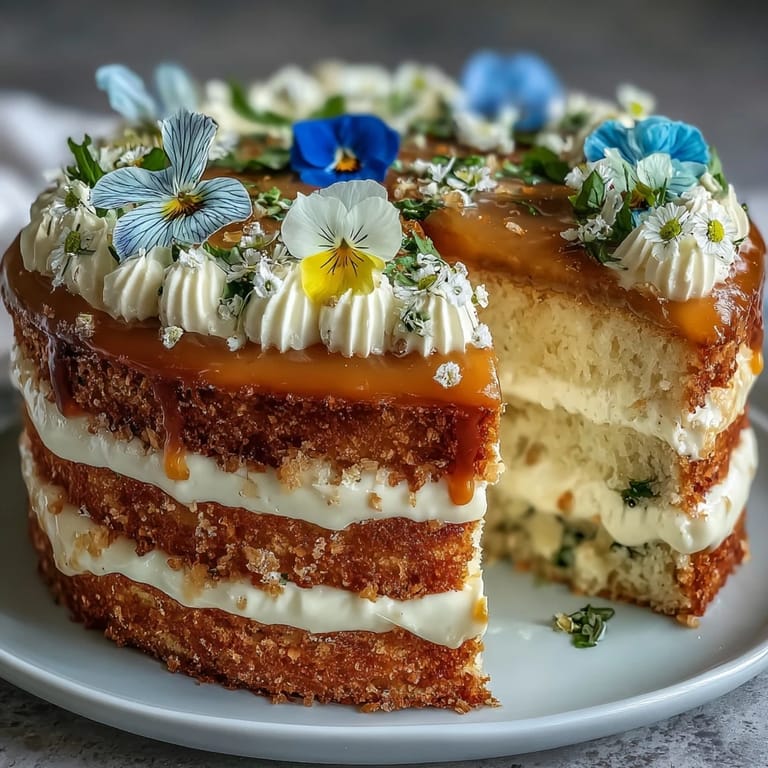
- Set one layer on the plate, cover with a generous sweep of lemon curd, then top with the second cake layer.
- Frost the cake:
- Spread whipped cream over the top and sides—keep it light and airy, creating swirls for the flowers to nestle into.
- Decorate:
- Cautiously place pressed flowers across the surface, pressing them gently so they adhere but stay delicate.
- Chill:
- Let the cake rest in the fridge at least 30 minutes so flavors deepen and decorations set firm.
 Pin It
 The cake became a centerpiece at my sister's birthday—her shy smile as she blew out the candles surrounded by edible petals was worth every step. Even after the last slice, the leftover pressed flowers sent home as favors made the occasion linger in everyone's memory just a bit longer.
How to Pick Your Edible Flowers
When I started looking for flowers, I wandered through farmer's markets and garden shops, asking every vendor about their growing methods. I learned to always check flowers for organic certification and double-confirm they're edible—never trust assumptions. Washing and patting them dry gently is key; even a tiny bit of moisture can bruise the petals or make them wilt.
Getting Lemon Curd Just Right
Making lemon curd feels a bit like alchemy—the mixture thickens slowly, then suddenly it's glossy and wonderful. I keep a bowl of ice nearby, ready in case it starts to overcook. The curd is best when smooth and tangy, so patience and constant stirring make all the difference.
Decorating Without Stress
Arranging the flowers was easier when I mapped out the design before starting—no last minute panic. I found tweezers helpful for placing delicate petals without smudging the whipped cream. Sometimes, imperfections add to the charm, so don't chase symmetry too hard.
- Sugar dusting around flowers hides any tiny cream smears.
- A parchment paper template keeps petals in place before final pressing.
- Let your creativity flow—each cake tells its own story.
 Pin It
 Baking this cake always feels like ushering in spring—the bouquet of flavors and colors is impossible not to smile at. If you try it, I hope the process brings as much delight as the finished creation.
Recipe FAQs
- → What gives the spring cake its light texture?
The cake achieves its light texture by creaming butter and sugar thoroughly, then carefully alternating dry ingredients and milk to maintain airiness.
- → How do you make lemon curd for the filling?
Lemon curd is made by whisking eggs, sugar, lemon juice, and zest over gentle heat, then blending in butter for a creamy and tangy filling.
- → Are pressed edible flowers safe to eat?
Edible flowers must be organically grown and confirmed pesticide-free to ensure safety and freshness when decorating cakes.
- → Can cake layers be prepared in advance?
The sponge cake layers can be baked ahead and wrapped at room temperature, streamlining assembly on the day of serving.
- → What pairs well with this dessert?
This cake pairs nicely with Earl Grey tea or sparkling Moscato, complementing its citrus and floral flavors.
- → What tools are needed for preparation?
An electric mixer, mixing bowls, cake pans, wire rack, double boiler, and offset spatula help with preparation and decoration.