 Pin It
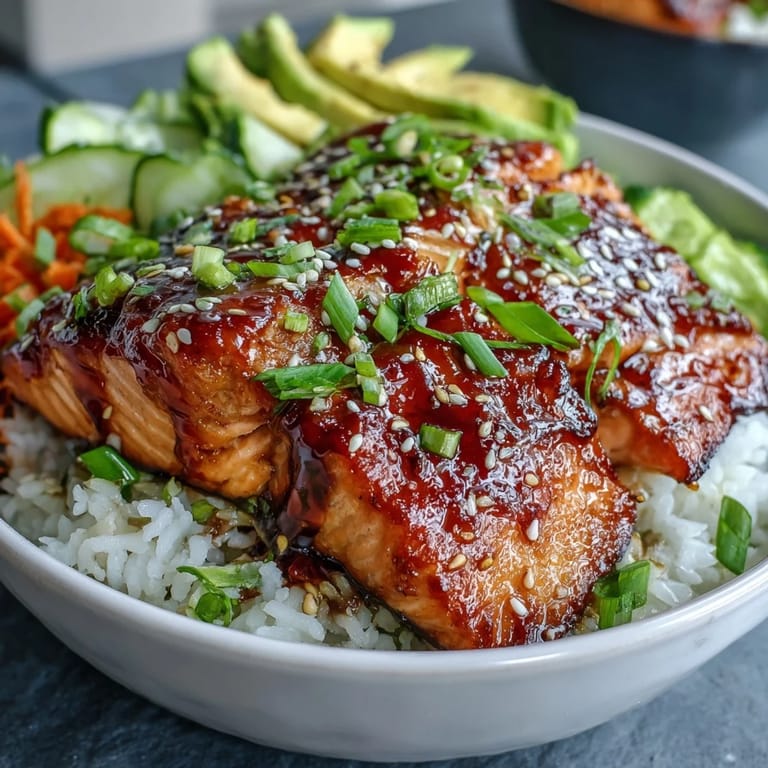
 The first time I made a teriyaki salmon bowl, the kitchen was full of laughter from a friend who came over unexpectedly. The sound of sizzling salmon, paired with the sweet aroma of honey and soy sauce, made me feel like I was improvising a concert. It's a dish that transforms a rushed evening into a moment of brightness, especially with summer's fresh vegetables waiting in the fridge. I recall how freeing it felt to pull everything together without fuss or precision. There was something deeply satisfying about the speed and freshness.
I once cooked this salmon bowl for my roommate after a late work shift, and neither of us wanted anything heavy or complicated. The teriyaki glaze bubbling up in the skillet sparked a conversation about how good homemade sauce can taste, and we both agreed it beats anything bottled. As I sliced avocado, she recounted her grandmother's trick for keeping the rice fluffy: a quick fork pass instead of spooning. It's the kind of recipe that quickly evolved into a weeknight ritual for us. Even the cleanup felt effortless compared to the reward.
Ingredients
- Salmon fillets: Fresh, skinless salmon ensures a tender bite, and letting it sit at room temperature for ten minutes before cooking prevents dryness.
- Vegetable oil: Helps sear the salmon evenly and adds a subtle silkiness to the glaze.
- Salt and pepper: Simple seasoning brings out the salmon's natural sweetness; sprinkle both sides just before cooking.
- Soy sauce: Foundational saltiness and depth; I prefer low-sodium so the sauce doesn't overpower delicate fish.
- Mirin: Sweet, tangy balance — dry sherry works well in a pinch.
- Honey: Adds gloss and gentle sweetness; it's what makes the glaze shine.
- Rice vinegar: Brightens the sauce, keeping it from tasting one-note.
- Fresh ginger: Grated ginger wakes up the sauce and adds warmth — don't skip it.
- Garlic: Even just one minced clove deepens flavor without overwhelming.
- Jasmine rice: Hot and fluffy rice makes the bowl substantial and perfectly absorbs the sauce.
- Cucumber: Thin slices snap against the warmth of the salmon — pat dry if your cucumber is watery.
- Carrot: Julienned carrots lend crunch and color; use a peeler for quick ribbons.
- Avocado: Creamy slices mellow out the savoriness and bring a bit of luxury.
- Scallions: Sprinkle for freshness and lift; these are best sliced at the very end.
- Toasted sesame seeds: For extra nutty flavor and a touch of texture — toast them in a dry pan if you have a minute.
Tired of Takeout? 🥡
Get 10 meals you can make faster than delivery arrives. Seriously.
One email. No spam. Unsubscribe anytime.
Instructions
- Mix the Teriyaki Sauce:
- In a small bowl, whisk soy sauce, mirin, honey, rice vinegar, ginger, and garlic until glossy and fragrant.
- Sear the Salmon:
- Heat vegetable oil in a non-stick skillet over medium-high; season the salmon with salt and pepper before nestling them into the pan, skin side down if they have skin.
- Glaze and Finish:
- Flip the fillets after 2–3 minutes, then pour in teriyaki sauce and let it bubble, spooning over until deeply glazed and the salmon is cooked through (about 1–2 more minutes).
- Build the Bowls:
- Divide hot rice between two bowls, then arrange cucumber, carrot, and avocado with a relaxed touch — no need for perfect lines.
- Add Salmon and Sauce:
- Place a salmon fillet in each bowl and drizzle with any leftover teriyaki from the pan for extra flavor.
- Garnish:
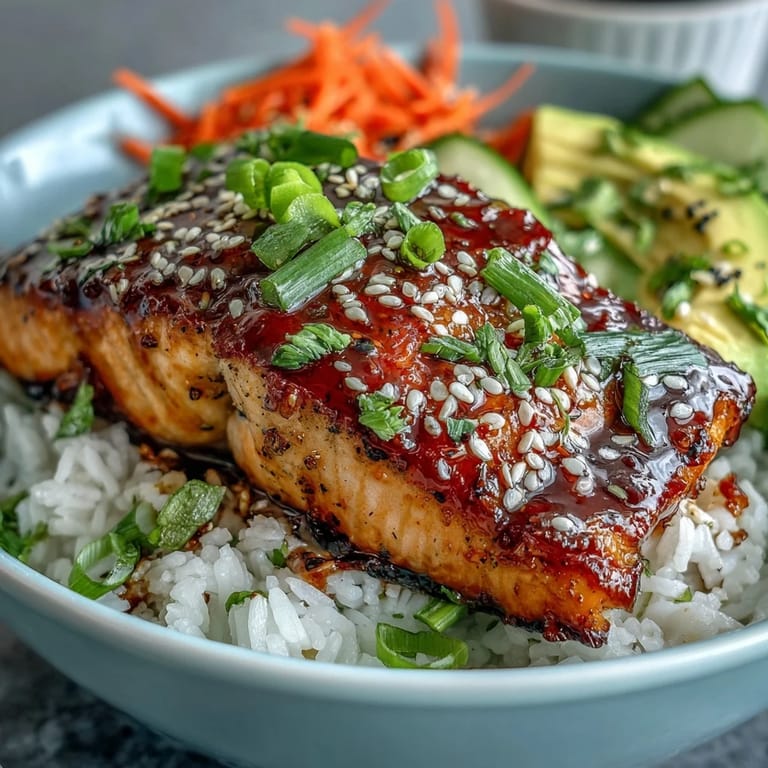
- Scatter sliced scallions and toasted sesame seeds for crunch and color before serving immediately.
 Pin It
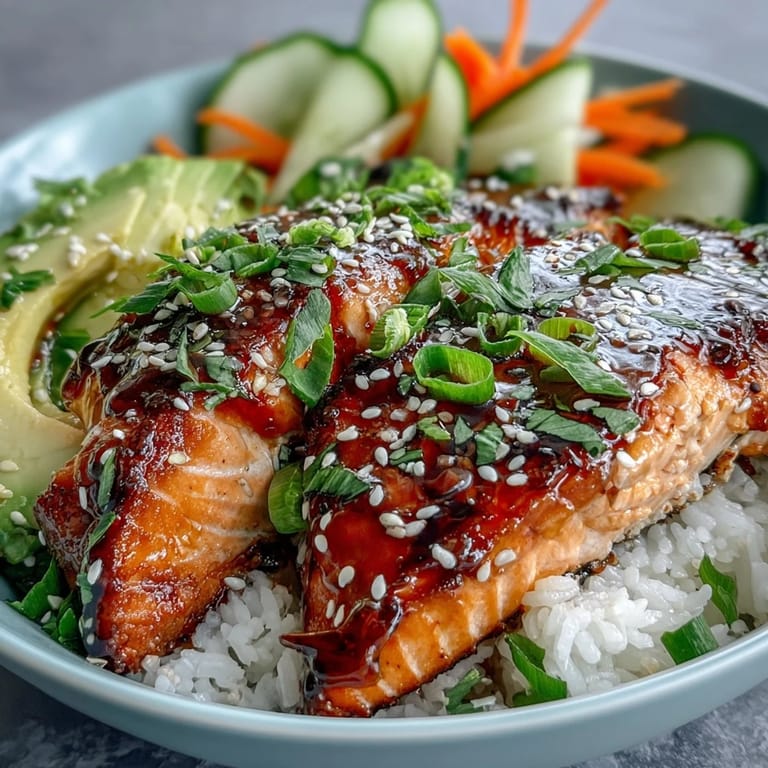
 Last summer, I brought this bowl to a lazy balcony dinner with friends, and we ended up sharing stories over the steam rising from our plates. It was remarkable how a handful of humble ingredients turned the evening into something playful and bright. We giggled about the avocado slices looking wonky, but nobody cared once that teriyaki hit the rice. It's become a dish that reminds me people appreciate small efforts. Simple cooking really brings out conversation.
Making Teriyaki at Home
Homemade teriyaki sauce always tastes fresher and you can adjust the sweetness to your liking — I sometimes add a splash of orange juice for a citrusy twist. Whisking it vigorously gets the honey evenly mixed. The ginger, grated just before, gives a lively lift that store-bought never quite matches. If you're feeling creative, add a pinch of chili flakes for gentle heat. Tasting the sauce before pouring makes you feel grounded in the kitchen.
Assembling the Bowls
When layering rice and veggies, I try to use the brightest ingredients for visual pop. Don't stress about precise placement, but aim for little clusters so every spoonful gets a mix of textures. Cucumber and carrot right after the hot salmon gives a refreshing crunch. My favorite trick is nestling avocado under the salmon so it warms slightly without browning. If the bowls are for guests, serve with chopsticks for fun.
Quick Substitutions for Busy Nights
Running low on time, I've swapped jasmine rice for brown rice or even leftover quinoa and it always works. Edamame beans or pickled ginger bring extra color and snap. Tamari instead of soy sauce means gluten-free friends can join in without fuss.
- Keep a spare stash of sesame seeds — they elevate almost any bowl.
- Slice veggies ahead in the morning for a real head start.
- Always taste your sauce before pouring; adjustments make it sing.
 Pin It
 This teriyaki salmon bowl is my dependable go-to for swift, healthy dinners that feel special. Serve it with friends or keep it solo for a treat — it never disappoints.
Recipe FAQs
- → How is the teriyaki glaze prepared?
The glaze is whisked from soy sauce, mirin, honey, rice vinegar, ginger, and garlic, then simmered with the salmon until bubbly and thick.
- → Can I substitute salmon with another fish?
Yes, firm white fish like cod or haddock works well. Adjust cooking time as needed for different thicknesses.
- → What vegetables fit best in this bowl?
Cucumber, carrot, and avocado add freshness. You can also include edamame, pickled ginger, or steamed broccoli.
- → Is this dish gluten-free?
Use tamari instead of soy sauce for a gluten-free version. Always check condiment labels for hidden wheat ingredients.
- → What grains can I use instead of rice?
Brown rice or quinoa provide a whole-grain alternative and can be swapped easily for added nutrition and texture.
- → How should leftovers be stored?
Cool completely and refrigerate in airtight containers. Consume within two days for best freshness and flavor.