 Pin It
 The first time I made a Buddha Bowl, I was recovering from a busy week at work and craving something that felt like a hug in a bowl. I piled whatever vegetables I had in the fridge into a ceramic bowl, drizzled tahini over everything, and took that first bite sitting cross-legged on my living room floor. Something about the combination of warm grains, crisp vegetables, and creamy dressing just reset my entire nervous system. Now it's the meal I turn to when life feels overwhelming and I need to remember how to breathe again.
My friend Sarah came over for dinner last month when I was testing this recipe, and she literally said 'I didn't know healthy food could taste this good.' She's someone who usually treats vegetables as a necessary evil, so watching her go back for seconds and then ask for the dressing recipe was pretty satisfying. We sat at my kitchen table until dusk, talking about everything and nothing, with empty bowls pushed to the side.
Ingredients
- Quinoa or brown rice: These grains create the perfect foundation — quinoa cooks faster and has a lighter texture, while brown rice adds nutty depth. I've learned to rinse quinoa thoroughly unless you want a bitter aftertaste that no amount of dressing can fix.
- Firm tofu or chicken breasts: Choose tofu pressed until it releases excess water for the crispest edges, or slice chicken against the grain for tender bites. The pressing step changed my tofu game forever — now I use canned beans or a heavy skillet as weights.
- Cherry tomatoes and shredded carrots: These bring sweetness and crunch that contrast beautifully with the earthy grains. I buy cherry tomatoes in bulk during summer and roast extras to stash in the freezer for winter bowls.
- Baby spinach and steamed broccoli: The spinach adds fresh mineral notes while broccoli contributes substance and texture. Steaming broccoli for exactly 4 minutes keeps it bright green but still tender — any longer and it turns that sad army color nobody wants on their plate.
- Avocado and radishes: Creamy avocado balances the sharp bite of thinly sliced radishes. I've discovered that adding avocado to the bowl while everything's still slightly warm makes it luxuriously creamy without needing extra dressing.
- Tahini dressing ingredients: This combination transforms grain bowls into something craveable. The secret I learned from a Lebanese friend is to whisk the tahini with lemon juice before adding anything else — it emulsifies into a velvety base that won't separate.
Tired of Takeout? 🥡
Get 10 meals you can make faster than delivery arrives. Seriously.
One email. No spam. Unsubscribe anytime.
Instructions
- Cook your grains:
- Rinse quinoa or rice until water runs clear, then combine with water in a saucepan and bring to a boil. Reduce heat to low, cover tightly, and simmer until grains are tender and water is absorbed — about 15 minutes for quinoa, 45 for brown rice. Let it stand covered for 5 minutes before fluffing with a fork.
- Prepare your protein:
- For tofu, toss cubes with olive oil, salt, and pepper, then spread on a baking sheet and roast at 200°C (400°F) for 20 minutes, turning halfway until golden and slightly crispy at edges. If using chicken, season slices with salt and pepper, then sauté in a skillet with olive oil over medium heat for 6 to 8 minutes until cooked through and no longer pink in center.
- Prep your vegetables:
- While grains and protein cook, halve cherry tomatoes, shred carrots, steam broccoli florets until tender-crisp, slice avocado into wedges, and thinly slice radishes. Do each vegetable mindfully — there's something meditative about transforming raw ingredients into colorful components.
- Whisk the tahini dressing:
- Combine tahini and lemon juice first, whisking until it thickens and pulls together, then add olive oil, maple syrup or honey, water, minced garlic, salt, and pepper. Keep whisking until silky smooth — the texture should coat the back of a spoon.
- Assemble your bowls:
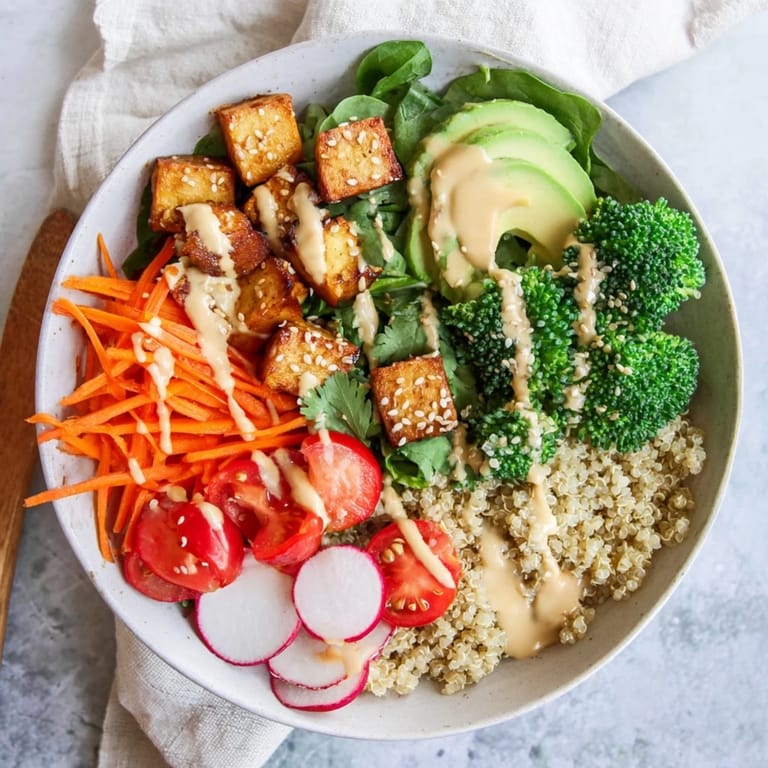
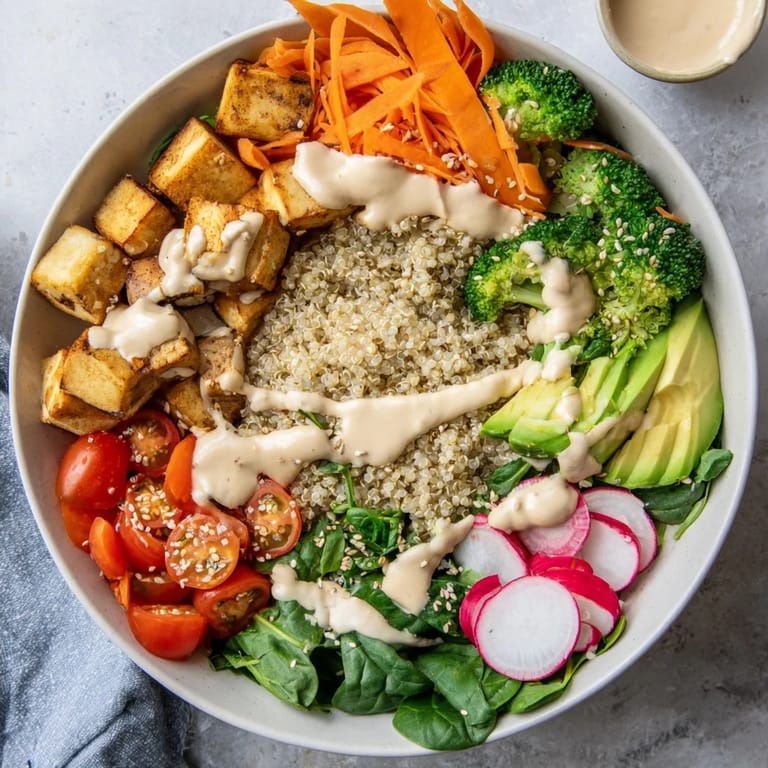
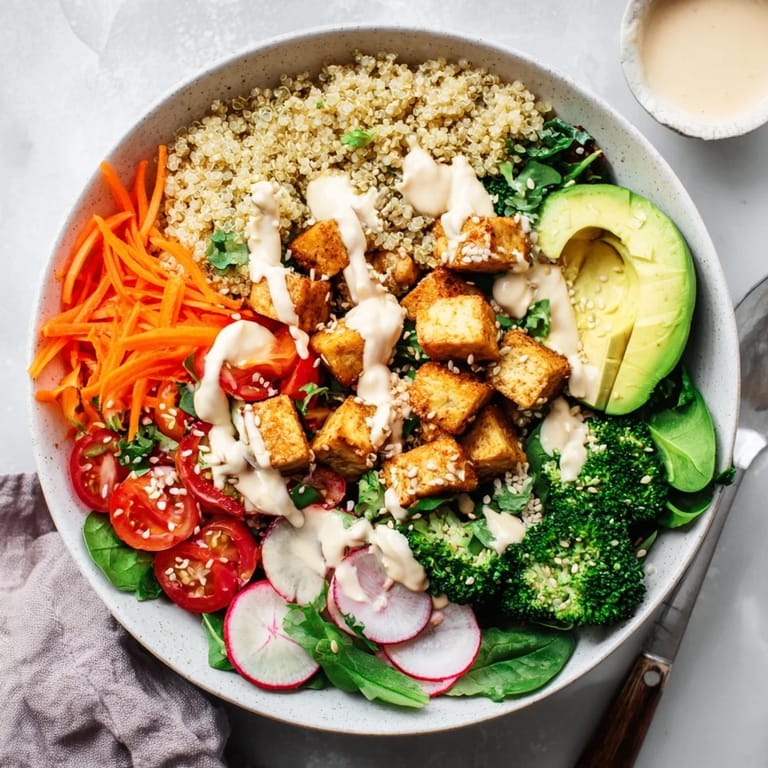
- Divide cooked grains among four bowls, then arrange vegetables and protein in sections on top like a colorful mosaic. Drizzle generously with tahini dressing, letting it cascade over everything.
- Add final touches:
- Sprinkle toasted sesame seeds and fresh herbs over each bowl, add pickled red onions if using, and serve immediately while grains are still warm. The contrast of temperatures — warm grains and protein against cool vegetables — is part of what makes this so satisfying.
 Pin It
 Last Sunday my partner called from work asking what smelled so good when I FaceTimed them from the kitchen. They came home early and we built our bowls together, each choosing different ratios of ingredients — more avocado for me, extra broccoli for them. Something about the casual, customize-it-yourself nature of this meal makes everyone feel welcome at the table, regardless of appetite or dietary preference.
Grain Choices That Change Everything
I've made these bowls with farro, millet, and even roasted sweet potato cubes as the base instead of grains. Each variation creates a completely different experience — farro adds chewiness and heft that stands up to bold flavors, while millet keeps everything light and delicate. The week I discovered roasted cauliflower as the grain substitute was the week my husband finally admitted he actually liked vegetables.
Make-Ahead Magic
This recipe taught me that some components actually improve with time — the tahini dressing develops deeper flavors after sitting overnight in the refrigerator, and roasted tofu reheats beautifully without losing its crispy edges. On Sundays I cook a big batch of grains and roast extra vegetables, then assemble Buddha bowls for weekday lunches in under five minutes. The ritual of preparing components feels like giving my future self a gift.
Building Your Perfect Bowl
The real art of Buddha Bowls is learning which textures and flavors balance each other — something creamy against something crunchy, something sweet against something sharp. I always start with the grain base, then place proteins and heavier vegetables opposite each other, tucking delicate greens and fresh garnishes around the edges. The visual appeal matters as much as the taste, because we eat first with our eyes.
- Warm components go in first so they heat the bowl slightly
- Drizzle dressing along the inside edge rather than pouring directly on center
- Save delicate herbs and seeds for last so they stay vibrant and crisp
 Pin It
 There's something profoundly grounding about eating from a bowl filled with colors and textures that took time to prepare. This recipe isn't just about nourishment — it's about the quiet pleasure of taking care of yourself, one colorful bite at a time.
Recipe FAQs
- → What makes a Buddha Bowl different from regular grain bowls?
Buddha Bowls emphasize balance with arranged sections of grains, proteins, and colorful vegetables. They typically include a creamy dressing and various textures from raw, roasted, and steamed components.
- → Can I prepare Buddha Bowls ahead for meal prep?
Absolutely. Cook grains and protein in advance, store vegetables separately, and keep dressing in a small jar. Assemble bowls fresh when ready to eat, adding dressing just before serving.
- → What other proteins work well in this bowl?
Try roasted chickpeas, tempeh, grilled shrimp, or even hard-boiled eggs. Each brings unique texture and flavor while complementing the tahini dressing and fresh vegetables.
- → How do I prevent the tahini dressing from becoming too thick?
Whisk in warm water one tablespoon at a time until reaching desired consistency. The dressing naturally thickens when cold, so thin it slightly more than needed initially.
- → Which vegetables offer the best texture contrast?
Combine crunchy raw elements like carrots and radishes with tender steamed broccoli, creamy avocado, and sweet roasted cherry tomatoes for satisfying variety in every bite.
- → Can I use different grains instead of quinoa or rice?
Farro, millet, bulgur, or barley all work beautifully. Adjust cooking times according to package instructions and ensure grains are fluffy before assembling your bowl.