 Pin It
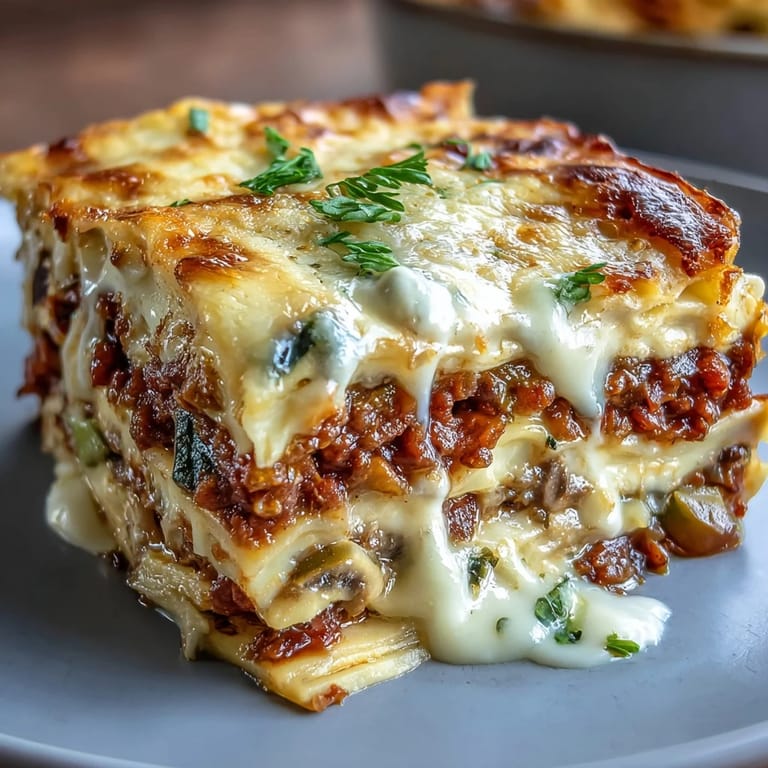
 There's something magical about the moment when you realize a dish doesn't need meat to feel substantial and satisfying. I discovered this one rainy Tuesday when my friend mentioned her craving for comfort food, but without the guilt that usually followed. That's when I started thinking about lentils differently—not as a side dish or soup base, but as the honest heart of something layered and warming. The smoked paprika was a gamble at first, but one whiff from the pan and I knew it would work. Now, every time I make this one-pan lasagne, I'm reminded that the best meals are often the unexpected experiments that somehow feel like they've always belonged.
I made this for a dinner party where half the guests were vegetarian and half weren't, and honestly, nobody noticed the difference in a bad way. What struck me was watching someone I knew as a devoted meat-eater go back for seconds without hesitation, then pause mid-bite and say, "Wait, where's the meat?" The answer was in the richness of the sauce, the earthiness of the mushrooms, and the way those red lentils had completely dissolved into something deeply savory. That moment changed how I think about cooking for groups—it's not about accommodating limitations, it's about discovering what food can actually do when you stop thinking of anything as a compromise.
Ingredients
- Olive oil: Use good quality if you can; it carries flavor through the whole dish and helps everything soften evenly without sticking.
- Onion and garlic: These are your foundation, so take time with them—they should smell sweet and golden before you move forward.
- Carrot, red bell pepper, mushrooms, and courgettes: Each vegetable adds its own moisture and sweetness; mushrooms especially bring umami that makes the whole thing feel meaty.
- Smoked paprika: This is non-negotiable and truly makes the dish—it's what gives everything that warm, complex smokiness that feels like it took hours to develop.
- Dried oregano and thyme: These Italian staples ground the dish in familiarity and tie everything together.
- Chili flakes: Optional, but a pinch adds intrigue without heat if you're careful with quantity.
- Tomato paste and canned tomatoes: The paste intensifies flavor when cooked briefly; the canned tomatoes provide both liquid and acidity.
- Soy sauce: A surprising addition that deepens savory notes without making the sauce taste Asian—it's the secret weapon.
- Red lentils: They break down during cooking and thicken the sauce naturally, plus they're packed with protein and fiber.
- Vegetable stock: Use something flavorful; weak stock will make the whole dish taste timid.
- Unsalted butter and flour: The base for béchamel; the ratio matters, so measure properly to avoid lumps.
- Whole milk: Full-fat creates the silkiest sauce, though semi-skimmed works if that's what you have.
- Ground nutmeg: Just a whisper, because too much overpowers and makes béchamel taste medicinal instead of luxurious.
- Mature cheddar or hard cheese: The sharpness cuts through the richness and adds complexity to the sauce.
- No-boil lasagne sheets: These are time-savers that soften from the moisture in your sauce, so don't skimp on liquid.
- Mozzarella or vegetarian cheese for topping: This melts and browns beautifully, creating that golden, bubbly finish that signals everything is ready.
Tired of Takeout? 🥡
Get 10 meals you can make faster than delivery arrives. Seriously.
One email. No spam. Unsubscribe anytime.
Instructions
- Get your oven ready:
- Preheat to 200°C (180°C fan) / 400°F / Gas 6 so it's hot and waiting when your sauce is built.
- Start the aromatics:
- Heat olive oil in your ovenproof pan over medium heat, then add onion and garlic, letting them soften for about 2 minutes until fragrant. You'll know they're ready when the raw edge softens and they start to turn translucent.
- Build the vegetable base:
- Add carrot, red pepper, mushrooms, and courgettes, stirring occasionally for 5–6 minutes until they release their moisture and begin to soften. The kitchen will smell sweet and earthy now; that's exactly what you want.
- Wake up the spices:
- Stir in smoked paprika, oregano, thyme, chili flakes, and tomato paste, cooking for about 1 minute just until fragrant. This brief cooking mellows the spices and makes them part of the sauce instead of floaty specks.
- Build the sauce:
- Add canned tomatoes, soy sauce, rinsed red lentils, and vegetable stock, then bring everything to a simmer. Cover and cook for 15–20 minutes, stirring occasionally, until the lentils are completely soft and the sauce has thickened noticeably—it should coat the back of a spoon.
- Make the béchamel:
- In a separate saucepan, melt butter over medium heat, stir in flour, and cook for 1 minute to cook out any raw flour taste. Gradually whisk in milk (doing this slowly prevents lumps), then keep stirring until the sauce thickens enough to coat your spoon, about 5 minutes total.
- Season the béchamel:
- Remove from heat and stir in nutmeg, cheese, salt, and white pepper, tasting as you go. The cheese should melt completely and make the sauce taste rich and slightly sharp.
- Prepare for layering:
- Remove half the veggie bolognese from your ovenproof pan and set it aside on a plate or small bowl. This splits your sauce into manageable portions for layering.
- Layer one:
- Spread 1/3 of the béchamel over the remaining sauce in the pan, then top with a layer of lasagne sheets, breaking them to fit the shape. Don't worry about perfect coverage; the sheets will soften and spread as everything cooks.
- Layer two:
- Spread half the reserved bolognese over the pasta layer, pour another third of béchamel over that, then top with another layer of lasagne sheets. You're creating pockets of flavor now—each layer slightly different.
- Final assembly:
- Top with the remaining bolognese, then the final lasagne sheets, and pour the last of the béchamel over everything. Sprinkle generously with grated mozzarella.
- Bake covered:
- Cover the pan loosely with foil and bake for 25 minutes so the pasta softens and everything heats through without the top browning too fast.
- Bake uncovered:
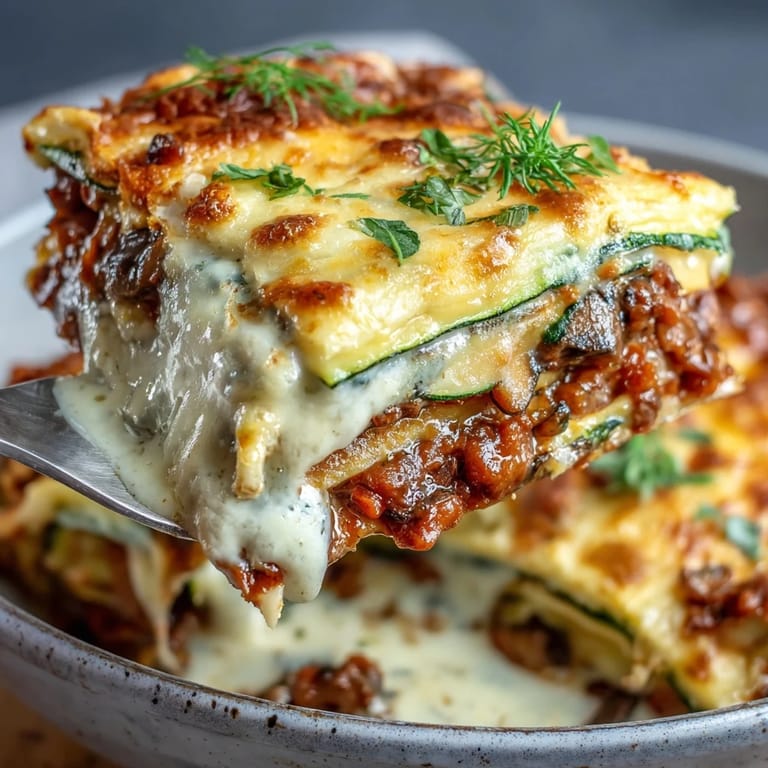
- Remove the foil and bake for another 10–15 minutes until the top is golden and the sauce is bubbling gently around the edges. You should see that mozzarella turning slightly brown at the peaks.
- Rest before serving:
- Let the lasagne sit for 10 minutes; this firms it up just enough so pieces hold together when you serve them. Garnish with fresh basil if you like a bright, herby finish.
 Pin It
 The first time someone told me this was their favorite lasagne they'd ever eaten, I felt something shift. They weren't comparing it to other vegetarian lasagnes or saying it was 'good for a meatless dish'—they were genuinely, simply saying it was their favorite. That's when I understood that sometimes the best food isn't about impressing anyone; it's about cooking something so honest and well-made that it just stands on its own.
The Magic of Smoked Paprika
The first time I used smoked paprika in this dish, I almost didn't believe how much one spice could change everything. It adds warmth and depth that makes you feel like the sauce has been simmering for hours, even though it hasn't. The key is adding it early enough to cook into the sauce rather than sprinkling it on at the end—it needs to meld with the oil and tomatoes to develop its full character. Once you taste what it does here, you'll understand why it's truly non-negotiable.
Why Red Lentils Work Better Than You'd Think
Red lentils are different from green or brown ones because they break down completely as they cook, which means they don't just add protein—they thicken and enrich the entire sauce. They also cook faster than other varieties, so you're not waiting around for them to soften. The texture becomes almost creamy when stirred into the tomato base, creating something that feels luxurious without any cream at all. This is comfort food that doesn't feel heavy or overstuffed, which is perhaps the best kind.
The One-Pan Genius (and Why It Matters)
Baking everything in one ovenproof pan isn't just convenient—it changes how the dish develops. The sauce reduces slightly as it bakes, concentrating flavors, and the edges of the pan crisp up slightly, adding texture that wouldn't exist if you transferred everything to a baking dish. Plus, there's something satisfying about looking into your oven and seeing your whole meal in one place, almost like watching a small edible landscape come together.
- An ovenproof cast iron or stainless steel pan works best; check yours before you start so you're not scrambling mid-recipe.
- If your pan has wooden or plastic handles, make sure they're truly oven-safe to at least 200°C, or the handles could get damaged.
- The one-pan setup means you're not dirtying extra dishes, which feels like a small victory when you're already tired from cooking.
 Pin It
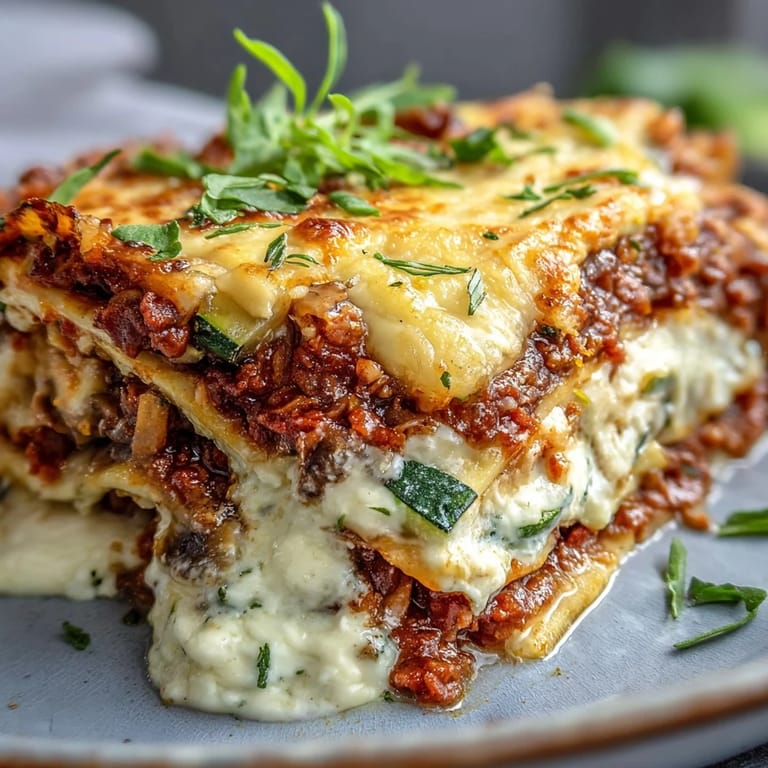
 This lasagne has a way of becoming the dish people request, the one that shows up at potlucks or dinners when someone wants something hearty and honest. Make it once and you'll understand why—it tastes like someone who knows what they're doing spent time on it, even though it's really just one pan and a little patience.
Recipe FAQs
- → Can I make this vegan?
Yes. Replace butter with dairy-free spread, use plant-based milk, and choose vegan cheese. The flavor remains delicious.
- → What gives the smoky flavor?
Smoked paprika provides the signature smoky taste. It's essential—don't substitute with regular paprika.
- → Do I need to cook lasagne sheets first?
No. Use no-boil sheets which soften perfectly in the sauce during baking. Regular sheets may be used but require pre-cooking.
- → Can I freeze this lasagne?
Yes. Assemble, cool completely, wrap tightly, and freeze for up to 3 months. Thaw overnight before baking.
- → What vegetables work best?
Mushrooms, courgettes, peppers, and carrots provide excellent texture and flavor. Swap based on preference or seasonality.
- → How do I know when lentils are cooked?
Red lentils should be tender but not mushy, typically after 15-20 minutes of simmering in the sauce.