 Pin It
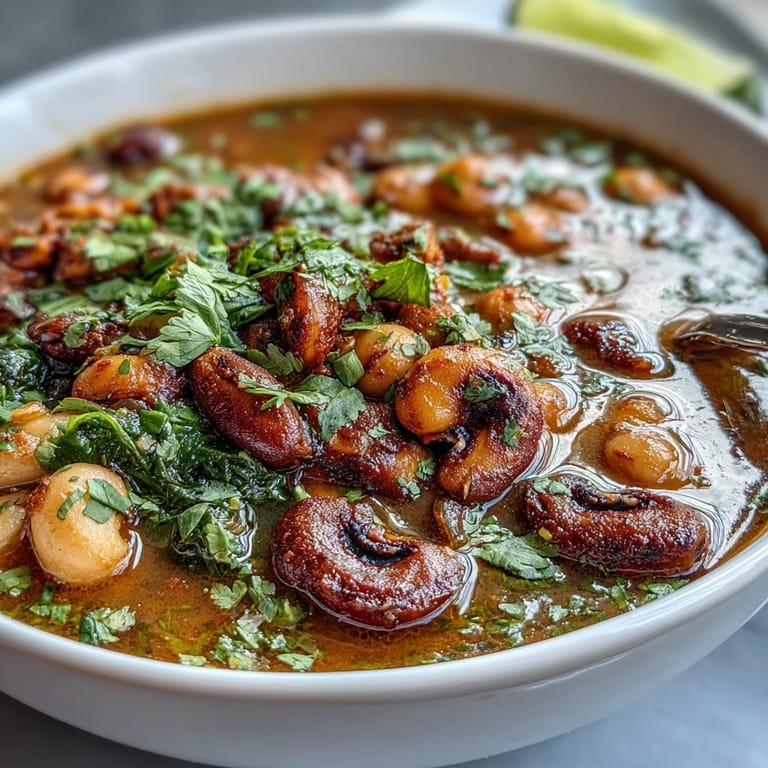
 My grandmother would simmer this stew on cold Sunday mornings while we played cards in her kitchen, the steam rising up like smoke signals that said comfort was coming. There's something about black-eyed peas and collard greens together that feels like home, like you're wrapped in the warmth of something tried and true. This isn't fancy cooking, it's the kind that fills your belly and stays with you long after the bowl is empty. Every time I make it, I understand a little more why this dish has lasted generations.
I made this the first time we had my partner's family over during a surprise snowstorm, when everyone got snowed in unexpectedly and we had to pivot dinner plans fast. The house filled with the smell of smoked paprika and garlic while we laughed in the kitchen, and by the time the stew was ready, the whole mood had shifted from stressed to grateful. Something about serving a bowl of this to people you care about, watching their shoulders relax as they taste it, reminds you why cooking matters.
Ingredients
- Olive oil: Enough to coat the bottom of your pot—this is your starting point, your foundation for building flavor.
- Yellow onion, carrots, and celery: These three are the aromatic backbone, the holy trinity that gives Southern cooking its soul; dice them roughly the same size so they cook evenly.
- Garlic: Mince it fresh and add it after the softer vegetables start breaking down, otherwise it can turn bitter.
- Jalapeño: Optional, but it adds a subtle warmth that builds as you eat; seed it if you want to tame the heat.
- Collard greens: Remove those tough stems completely—they'll never soften, no matter how long you simmer, so don't waste the effort.
- Diced tomatoes: Canned is fine here and honestly better than fresh because the acidity and juice are consistent.
- Black-eyed peas: Canned works great if you're short on time, but if you cook them dried, save some of that cooking liquid instead of broth for deeper flavor.
- Vegetable broth: Go low-sodium so you control the salt level as you cook; you'll taste the vegetables better this way.
- Smoked paprika: This is the secret whisper that makes people ask what your magic ingredient is—don't skip it or swap it for regular paprika.
- Thyme, cayenne, salt, and black pepper: Dried thyme works better than fresh here because it doesn't break down into bits that get stuck in your teeth.
- Bay leaves: Always remove these before serving; they're flavor workers, not meant to be eaten.
- Apple cider vinegar: Added at the end, it brightens everything and cuts through the richness so the stew doesn't feel heavy.
Tired of Takeout? 🥡
Get 10 meals you can make faster than delivery arrives. Seriously.
One email. No spam. Unsubscribe anytime.
Instructions
- Start with heat and aromatics:
- Pour oil into your pot and let it warm until it shimmers slightly, then add onion, carrots, celery, and jalapeño. You're looking for them to soften and turn translucent at the edges, about 6 to 8 minutes—don't rush this, because this is where flavor begins.
- Bloom your aromatics with spices:
- Once the garlic goes in and smells incredible, add all your spices at once and stir constantly for just one minute. This blooming step releases the essential oils and prevents them from tasting dusty or raw in the finished stew.
- Wilt the greens:
- Add the collard greens all at once—it looks like you've overfilled the pot, but they shrink down fast. Stir them for a few minutes until they soften and release their moisture.
- Build the broth:
- Add tomatoes with their juices, then the black-eyed peas, broth, water, and bay leaves all together. Stir everything so nothing sticks to the bottom, then bring it to a gentle simmer.
- Let time do the work:
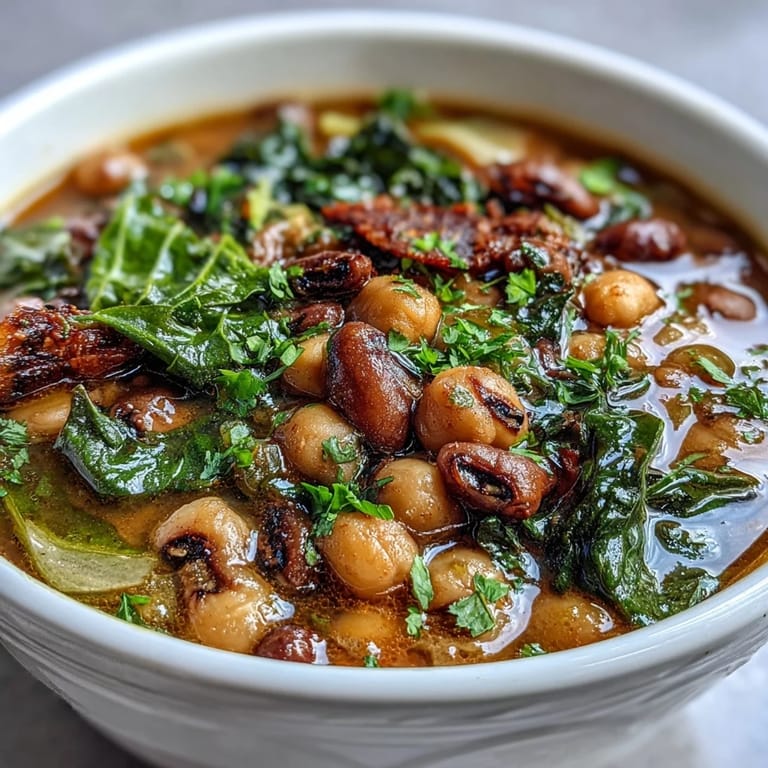
- Lower the heat, cover the pot, and let it simmer for 45 to 50 minutes, stirring occasionally so flavors meld and collards become completely tender. You'll know it's ready when a collard leaf falls apart easily with a wooden spoon.
- Finish with brightness:
- Remove the bay leaves, then stir in the apple cider vinegar and taste. Adjust salt and pepper to your preference—this is your moment to own the flavor.
 Pin It
 There was a moment during a family dinner when my uncle went quiet after his first spoonful, and I realized he was thinking about his own mother's kitchen, wherever he was in his memories. That's when I understood this dish isn't really about the ingredients—it's about connection, continuity, and the way food can hold someone else's story while you're eating it.
When to Add Meat and Smoke
If you want to make this less vegetarian and more traditional soul food, dice 4 ounces of smoked turkey or ham and sauté it with the vegetables in step one, or add a teaspoon of liquid smoke with the spices in step three. The smoke doesn't replace the vegetables—it amplifies them, giving everything a deeper, slightly charred taste that makes people close their eyes while they eat. Either way works beautifully, but timing matters because you want the smoke to weave through the entire stew, not just sit on top.
Adjusting Heat and Flavor
This recipe lives in the middle of the flavor spectrum—not too spicy, not too mild, which is perfect if you're cooking for a mixed group. But your kitchen is your kingdom, so feel free to lean into heat by increasing the jalapeño or cayenne, or tone it down completely if you prefer milder food. I've also served this with hot sauce on the side so people can add their own fire, which saves you from cooking one version for one person and something else for everyone else.
Serving and Storage
Serve this hot in deep bowls with cornbread on the side, or over rice if you want to stretch it further and catch all the broth. It tastes even better the next day after the flavors settle and deepen overnight in the fridge, and it freezes beautifully for up to three weeks in airtight containers or bags. When you reheat it, do it slowly on the stove with a little extra broth so the greens don't tighten up.
- A squeeze of fresh lemon juice wakes up the flavors right before you eat if the stew tastes a little flat.
- Cornbread isn't just a side dish, it's basically a spoon for the broth—don't skip it if you can help it.
- Make a double batch when you can, because this freezes beautifully and future you will thank present you on a busy night.
 Pin It
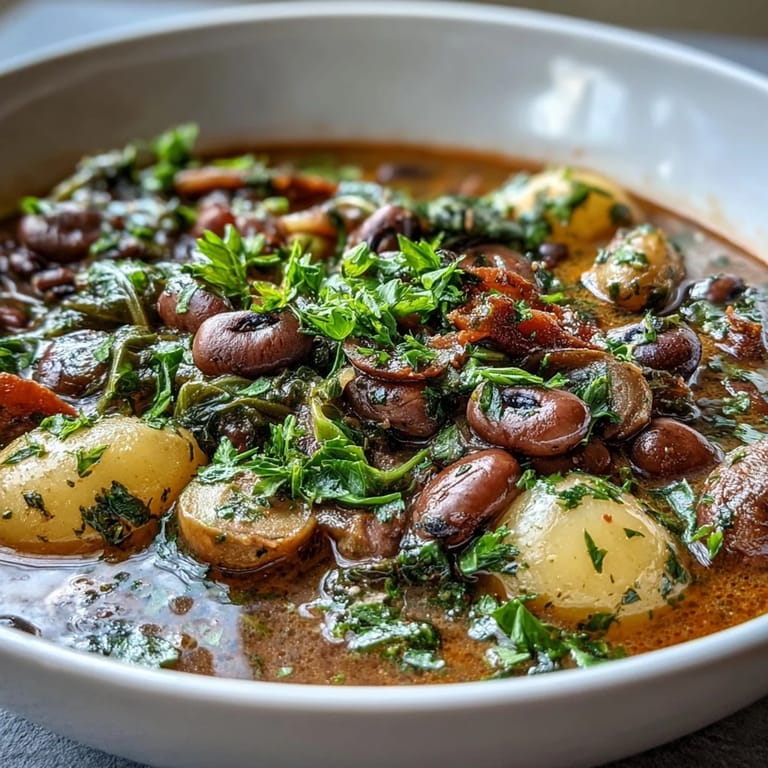
 This stew is proof that the simplest meals often matter the most—there's no technique to master, just ingredients working together and time doing what it does best. Make it for yourself on a cold day, or make it for people you want to feed, and watch how quickly a pot of stew becomes a reason to gather.
Recipe FAQs
- → What beans are used in this stew?
Black-eyed peas provide a creamy texture and earthy flavor, forming the stew’s hearty base.
- → Can I make this dish spicier?
Yes, increase the amount of jalapeño or cayenne pepper to add more heat according to your taste.
- → How do I prepare the collard greens for cooking?
Remove stems and chop the leaves before adding them to the stew to ensure they cook evenly and become tender.
- → What adds the smoky flavor to the stew?
Smoked paprika and optional additions like smoked turkey or liquid smoke deepen the stew’s smoky character.
- → Is there a way to brighten the flavors at the end?
Stirring in apple cider vinegar right before serving adds a pleasant tang that balances the rich taste.
- → What cooking method is best for this dish?
Simmering slowly in a heavy pot or Dutch oven allows the flavors to meld and the greens to soften beautifully.