 Pin It
 One October afternoon, my kitchen filled with the smell of roasting squash while rain pattered against the window, and I realized this soup had quietly become my answer to everything—exhaustion, uncertainty, the vague sense that my body needed something real. The spices arrived in that warm orange puree like a small act of kindness I was giving myself, and somehow, ladling it into a bowl felt like the most honest thing I'd done all week.
I made this for my sister on an evening when she needed grounding, when the world felt too sharp and uncertain, and watching her eat two bowls in silence before finally exhaling told me everything. She's not the type to gush over food, but she asked for the recipe that night, and I knew it wasn't really about the soup—it was about being held by something nourishing when everything else felt fragile.
Ingredients
- Butternut squash: Roasting it first caramelizes the edges and deepens the natural sweetness; don't skip this step even though it adds time, because it's where the real flavor lives.
- Red lentils: They break down faster than other varieties and thicken the soup naturally, creating that velvety texture without cream or flour.
- Carrots: Their gentle sweetness balances the earthiness of lentils and adds body; I always chop them smaller than usual so they soften completely.
- Onion and garlic: The aromatic foundation that makes the whole kitchen smell like home; don't rush the initial sauté or you'll miss the moment when they turn translucent and sweet.
- Spice blend (cumin, coriander, turmeric, cinnamon, smoked paprika): Each spice has a purpose—cumin grounds it, turmeric adds warmth and depth, cinnamon whispers in the background, and smoked paprika gives it a subtle earthiness that people taste without quite identifying.
- Vegetable broth and water: The ratio matters because too much liquid dilutes the flavor while too little makes it paste-like; I learned this by accident once and the result was so thick I had to water it down mid-cooking.
- Olive oil: Use good quality; it's one of the few ingredients you actually taste.
- Lemon juice: This brightens everything at the end, lifting the soup from heavy to luminous.
Tired of Takeout? 🥡
Get 10 meals you can make faster than delivery arrives. Seriously.
One email. No spam. Unsubscribe anytime.
Instructions
- Prepare your squash for roasting:
- Peel the butternut squash carefully (a vegetable peeler works, but a sharp knife is sometimes easier), scoop out the seeds, and cut the flesh into roughly one-inch cubes. Toss them with a tablespoon of olive oil, a pinch of salt, and a few grinds of black pepper.
- Roast until caramelized:
- Spread the squash on a baking sheet in a single layer and slide it into a 400°F oven for 25 to 30 minutes. You'll know it's ready when the edges turn golden-brown and a fork slides through easily; this is where patience pays off because the deeper color means deeper flavor.
- Start your aromatics:
- While the squash roasts, heat the remaining tablespoon of olive oil in a large pot over medium heat. Add the chopped onion and carrots, stirring occasionally, until they begin to soften and the onion turns translucent, about five minutes.
- Wake up the spices:
- Add the minced garlic and cook for just one minute until fragrant, then sprinkle in the cumin, coriander, turmeric, cinnamon, and smoked paprika. Stir constantly for about 30 seconds—you'll smell the moment when the spices release their oils and bloom, transforming from raw powder into something aromatic and alive.
- Build the soup:
- Add the roasted butternut squash, rinsed red lentils, vegetable broth, and water to the pot. Bring everything to a boil, then reduce the heat and let it simmer gently, uncovered, for about 20 minutes. The lentils will soften and begin to break apart, and the whole pot will smell like warmth and home.
- Blend until silky:
- Once the lentils are completely soft, remove the pot from heat. Using an immersion blender, puree the soup directly in the pot, working in sections if needed, until you reach your desired smoothness—I like mine completely velvety with no visible chunks. If using a standard blender, work carefully in batches and return the soup to the pot.
- Finish and taste:
- Stir in the lemon juice, then taste and adjust the seasoning with salt and pepper. This final step is crucial because the lemon brightens everything and can change how you perceive the spices.
- Serve with intention:
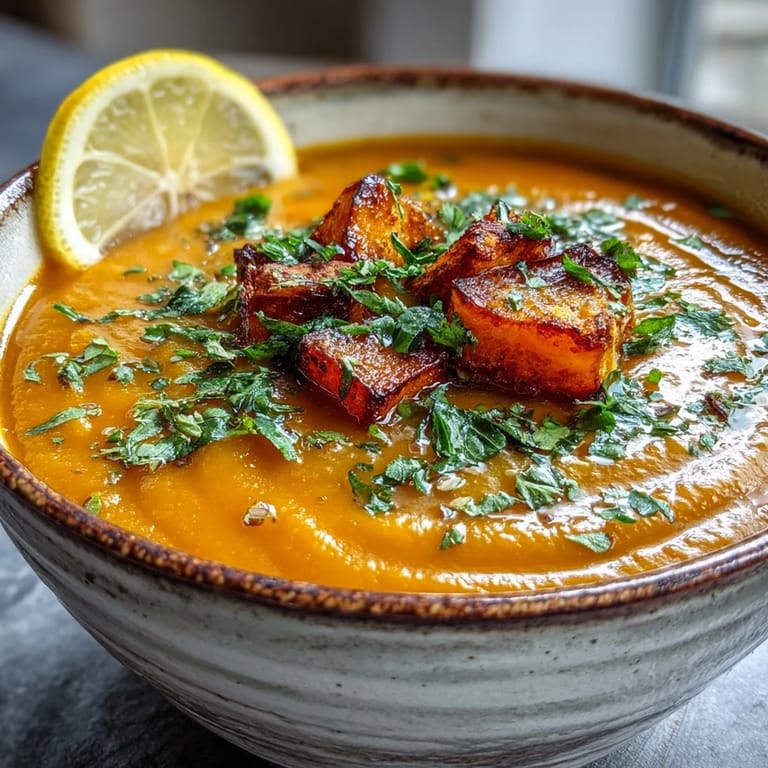
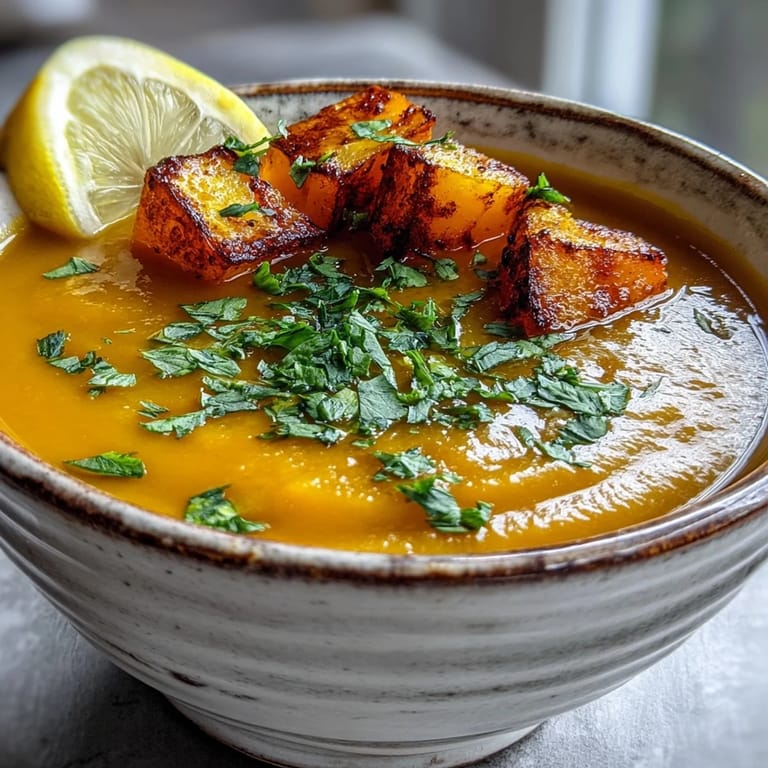
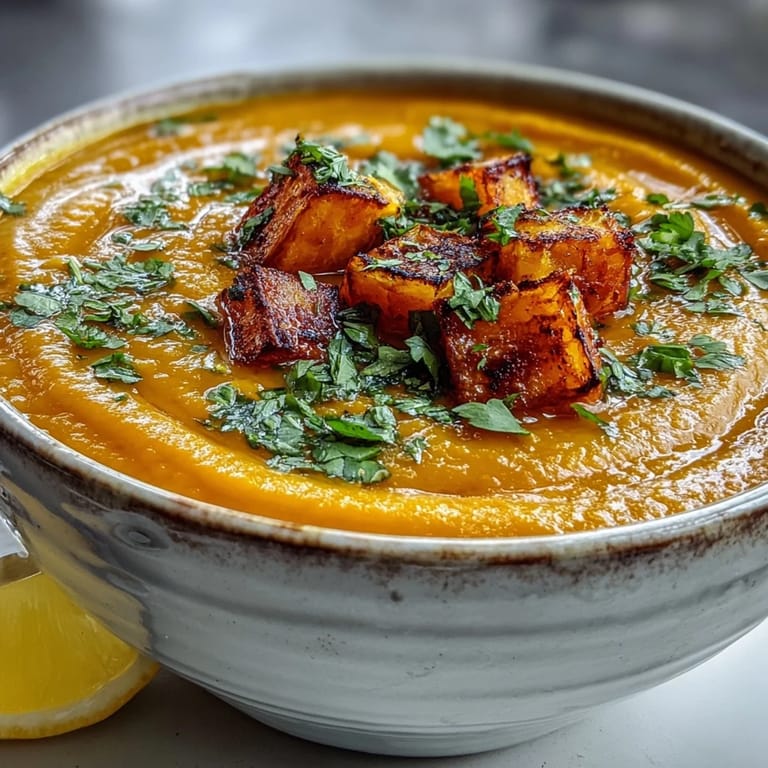
- Ladle into bowls and top with fresh cilantro or parsley if you have it, or simply let the soup shine on its own.
 Pin It
 There's a moment, right after blending, when the soup transforms from a pile of ingredients into something whole and cohesive, something that didn't exist before your hands made it. That's the moment I think about why cooking matters—not because it's efficient or impressive, but because it turns simple things into something that nourishes both body and the small lonely part inside that sometimes needs proof that care still exists.
The Secret to Depth
The spice blend is quietly doing the heavy lifting here, creating warmth and complexity without announcing itself loudly. I used to make this soup with just salt and pepper, thinking the squash and lentils were enough, and while it wasn't bad, it was missing something essential. Now I understand that the spices—especially the turmeric and smoked paprika—create a kind of invisible richness that makes people ask what's in here, and then feel somehow understood when you tell them it's just humble ingredients treated with attention.
Texture and Creaminess Without Compromise
The beauty of this soup is that it's naturally creamy from the lentils breaking down, so there's no need for cream or coconut milk unless you want extra indulgence. That said, I sometimes stir in a quarter cup of coconut milk before blending on nights when I'm feeling self-indulgent, and it transforms the soup into something almost decadent while keeping it vegan. The immersion blender is your friend here—it lets you control the texture precisely, stopping when you want, continuing if you want it smoother.
When to Serve and Why It Matters
This soup tastes best eaten slowly, ideally on a day when you have time to sit with it and notice how it warms you from the inside. It's the kind of food that works for lunch when you need centering or dinner when you need comfort, and it reheats beautifully on the stove (not the microwave if you can help it, because the stovetop helps it remember it's alive). If you're serving it to others, ladle it carefully—there's something about the deliberate act of serving that turns food into a gesture.
- Make it thicker or thinner depending on your mood by adjusting the water ratio.
- Leftover soup keeps for four days in the refrigerator and freezes beautifully for up to three months.
- Pair it with crusty gluten-free bread or simply a small green salad if you want lightness alongside the richness.
 Pin It
 This soup has become my go-to offering when someone needs feeding, not with complicated care but with something honest and warm. Make it for yourself on an ordinary Tuesday and notice how it changes the whole evening.
Recipe FAQs
- → Can I make this soup ahead of time?
Absolutely. This soup actually tastes better the next day as flavors meld. Store in an airtight container in the refrigerator for up to 4 days, or freeze for up to 3 months. Reheat gently on the stove, adding a splash of broth if needed.
- → Do I need to peel the butternut squash?
Yes, the skin becomes tough when roasted and doesn't break down during blending. Peel thoroughly before cubing to ensure a perfectly smooth final texture. A sharp vegetable peeler makes this task quick and easy.
- → Can I use other types of lentils?
Red lentils work best because they cook quickly and dissolve into the soup for creaminess. Yellow lentils are a good substitute. Avoid green or brown lentils as they hold their shape and won't create the same silky texture.
- → How can I make this soup more filling?
Pair with crusty gluten-free bread for dipping, or serve over cooked quinoa or rice. Adding a can of coconut milk before blending creates extra richness and increases calorie content for a heartier meal.
- → Is this soup suitable for batch cooking?
Perfect for batch preparation. Double or triple the recipe and portion into containers for easy lunches or dinners throughout the week. The consistency remains excellent after freezing and reheating.
- → What can I use instead of an immersion blender?
A standard blender works well—cool the soup slightly first and blend in batches, leaving the steam vent open. Alternatively, use a potato masher for a chunkier texture, or skip blending entirely for a rustic stew-style soup.