 Pin It
 There's something about November afternoons that makes me crave warmth on a plate rather than in a cup. I was standing at the farmers market, drawn to a pile of butternut squash the color of burnished gold, when it hit me that I needed to build something substantial around it, something that wouldn't feel heavy but would still satisfy. The hummus idea came later, a whisper from a friend's kitchen story, and suddenly this salad felt inevitable, like it had been waiting to exist all along.
I made this for my sister one gray Sunday when she'd been going through a rough patch, and watching her face light up at the first bite reminded me that food does something special beyond just filling your stomach. She asked for the recipe immediately, which felt like the highest compliment.
Ingredients
- Butternut squash, peeled and cubed (about 700 g): The star that turns golden and caramelized in the oven, bringing natural sweetness and a silky texture that anchors the whole dish.
- Sweet potatoes, peeled and cubed (about 500 g): These deepen the sweetness and add an earthy backbone that balances the brightness of the peppers and lemon in the hummus.
- Red bell peppers, seeded and sliced: They stay slightly tender with charred edges after roasting, adding color and a subtle sweetness that rounds out the vegetables.
- Olive oil for roasting (2 tablespoons): Use a good quality oil because it directly touches your vegetables at high heat and flavors everything.
- Salt and pepper, to taste: Season your vegetables generously before roasting, as this is your only chance to build flavor into them before they hit the oven.
- Butter beans, drained and rinsed (400 g can): These are creamier and more delicate than chickpeas, making a hummus that's almost velvet-like on your tongue.
- Tahini (2 tablespoons): This is your secret weapon for richness and depth, but if you're sensitive to sesame, sunflower seed butter works beautifully too.
- Lemon juice (2 tablespoons): Fresh lemon is non-negotiable here, as it brightens everything and keeps the hummus from feeling heavy.
- Garlic, crushed (1 clove): One clove is all you need, crushed rather than minced so it releases its oils and integrates smoothly into the hummus.
- Extra-virgin olive oil for hummus (3 tablespoons): This is the finishing oil, so splurge a little if you can, as it shapes the final flavor.
- Ground cumin (1/2 teaspoon): A whisper of cumin ties the whole dish together without announcing itself loudly.
- Mixed seeds for toasting (3 tablespoons pumpkin, sunflower, sesame): Toast these yourself because store-bought toasted seeds lose their vibrancy, and the moment your kitchen fills with that nutty aroma is half the magic.
- Fresh parsley, chopped (2 tablespoons): A final sprinkle of green brings freshness and a hint of herbaceous lift to each bite.
- Smoked paprika, optional (1 teaspoon): This adds a whisper of smokiness and a warm color that makes the plate more visually inviting.
Tired of Takeout? 🥡
Get 10 meals you can make faster than delivery arrives. Seriously.
One email. No spam. Unsubscribe anytime.
Instructions
- Get your oven ready and prep your vegetables:
- Preheat your oven to 200°C (400°F) while you peel and cube your butternut squash and sweet potatoes, then slice your bell peppers. The prep work might feel tedious, but having everything cut to roughly the same size ensures even cooking.
- Toss and roast:
- Spread all your vegetables on a baking tray, drizzle generously with olive oil, season boldly with salt and pepper, and toss everything together with your hands until coated. Roast for 30 to 35 minutes, giving the tray a good shake halfway through so the edges get golden and caramelized rather than steamed.
- Make the hummus while vegetables roast:
- In a food processor, combine your drained butter beans, tahini, lemon juice, crushed garlic, olive oil, cumin, and a pinch of salt and pepper. Blend until you reach a texture that's creamy and smooth, adding water a tablespoon at a time until it feels luxurious on your tongue rather than stiff.
- Toast your seeds for crunch:
- While the hummus blends, heat a dry skillet over medium heat and add your mixed seeds, stirring constantly for just 2 to 3 minutes until they smell incredible and turn lightly golden. Don't walk away from this step, as seeds can go from toasted to burnt in an instant.
- Bring it all together on the plate:
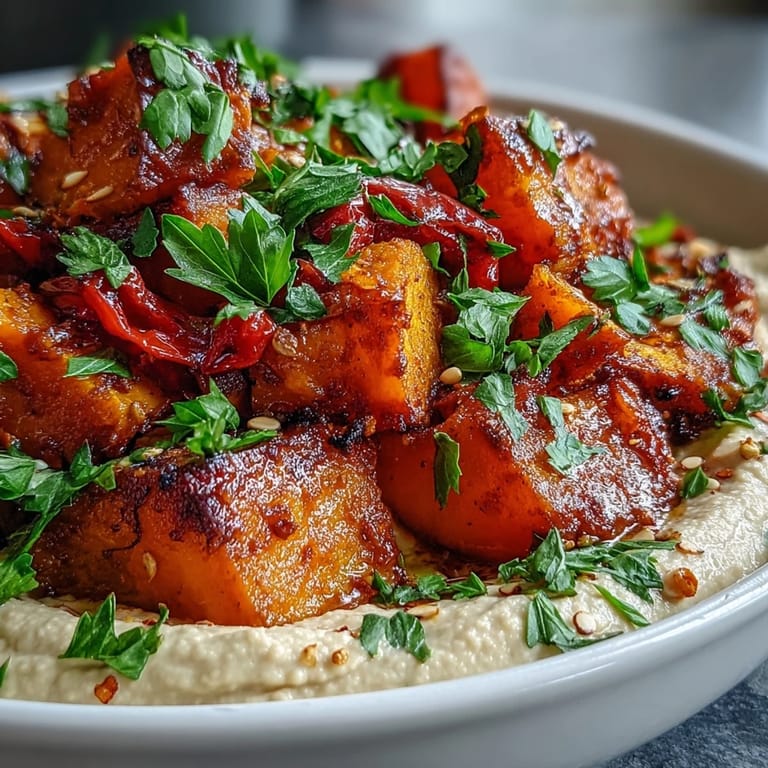
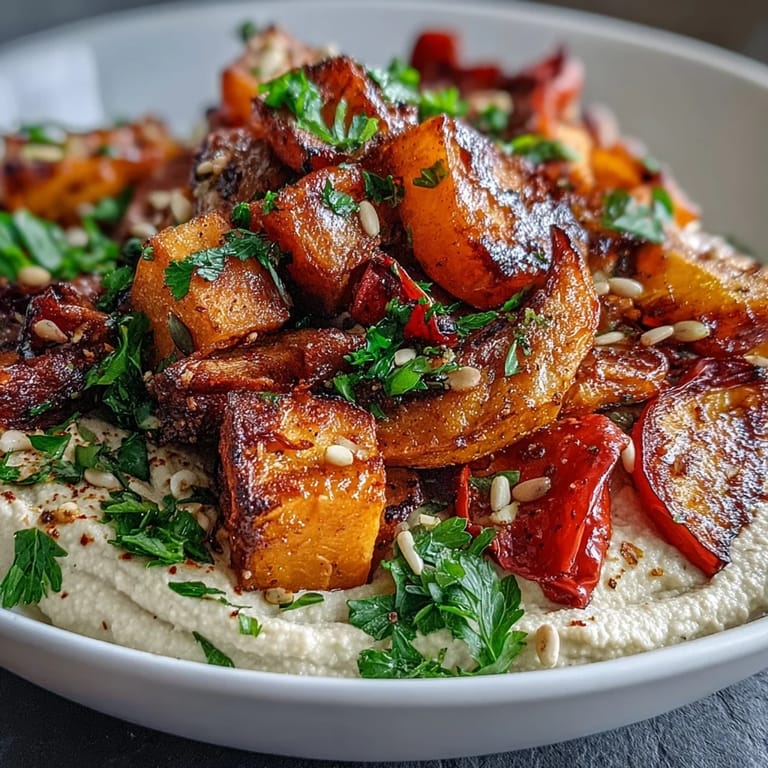
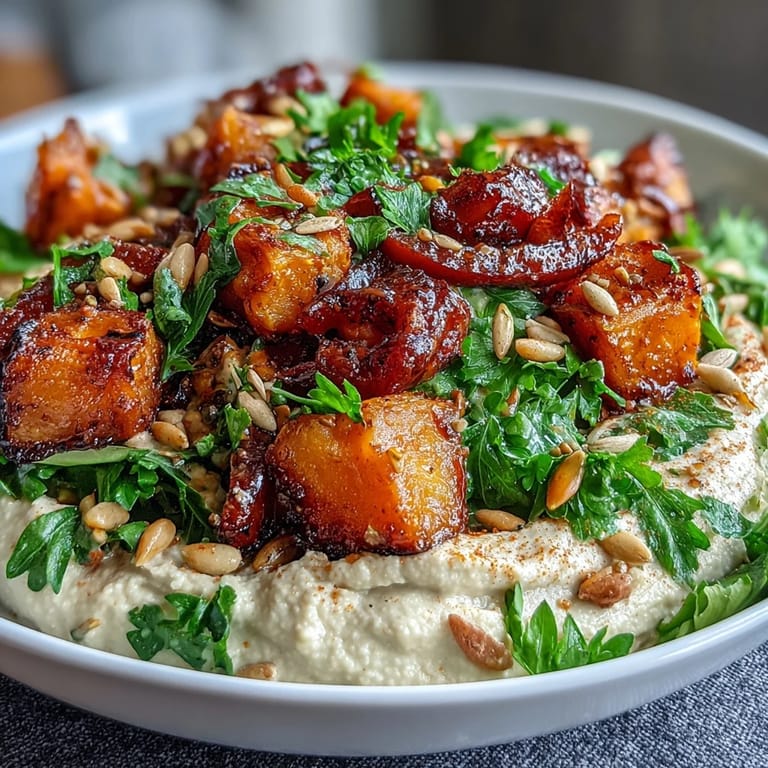
- Spread a generous layer of butter bean hummus as your base on each plate, top with the warm roasted vegetables, then scatter your toasted seeds and fresh parsley across the top. A final dusting of smoked paprika brings everything to life if you're using it.
 Pin It
 The first time I served this to guests who I wasn't sure would appreciate vegetarian food, they went quiet for a moment before asking if there was really no meat in this dish. That silence meant everything to me.
Why Roasting Changes Everything
Roasting isn't just a cooking method here, it's a transformation. The natural sugars in butternut squash and sweet potatoes concentrate and caramelize in the heat, creating depth and sweetness that raw or steamed vegetables simply can't achieve. When you roast at a high enough temperature, the vegetables develop golden edges where the sugars have actually caramelized, and that's where the flavor magic happens. I learned this the hard way by once trying to save time with lower heat and longer cooking, and the result was mushy, pale vegetables that tasted like disappointment.
The Hummus as the Foundation
This butter bean hummus isn't a side note or an afterthought, it's the entire reason this salad works. While chickpea hummus is traditional and wonderful, butter beans create something creamier and more subtle, almost buttery in texture. The tahini adds richness without overpowering, and the lemon juice keeps everything bright and prevents that heavy feeling you get with some hummus preparations. I've found that letting people taste the hummus before adding vegetables sometimes converts skeptics into believers.
Seed Toasting and Why It Matters
There's a difference between seeds that have been sitting in a bag and seeds you've toasted yourself five minutes before eating. The heat wakes them up, releases their oils, and transforms them from a texture into a flavor. It takes barely three minutes and makes the entire dish sing differently.
- Toast your seeds in a completely dry pan with no oil, stirring constantly so they toast evenly rather than burning on one side.
- You'll know they're ready when your kitchen smells like a toasted nut shop and the seeds have turned visibly golden.
- Transfer them to a plate immediately so they don't continue cooking from residual heat and tip into bitterness.
 Pin It
 This salad became my answer to the question of how to eat well in winter without feeling like I'm punishing myself. It's proof that the simplest ingredients, treated with care and respect, become something memorable.
Recipe FAQs
- → Can I make the hummus ahead of time?
Yes, the butter bean hummus keeps well in the refrigerator for up to 4 days. Store it in an airtight container and give it a good stir before serving. You may need to add a splash of water to restore the creamy consistency.
- → What vegetables work best for roasting?
Butternut squash and sweet potatoes are ideal because they hold their shape well and develop natural sweetness during roasting. You can also add red onions, carrots, parsnips, or Brussels sprouts following the same roasting method.
- → Can I use chickpeas instead of butter beans?
Absolutely. Chickpeas make an excellent substitution and will create a more traditional hummus flavor profile. The preparation method remains identical—blend with tahini, lemon, garlic, and seasonings until smooth and creamy.
- → How do I store leftovers?
Store components separately in airtight containers in the refrigerator. Roasted vegetables keep for 3-4 days, while the hummus lasts up to a week. Toasted seeds are best stored at room temperature in a sealed jar to maintain their crunch.
- → What can I serve alongside this dish?
Crusty bread, warm pita, or flatbread pairs wonderfully for scooping up the hummus. For a lighter meal, serve with a side of greens. A crisp white wine like Sauvignon Blanc or a light red such as Pinot Noir complements the roasted flavors beautifully.
- → Is this suitable for meal prep?
Yes, this dish is excellent for meal prep. Roast a batch of vegetables and prepare the hummus at the start of the week. Portion into containers, keeping the toasted seeds separate until ready to eat to preserve their crunch.