 Pin It
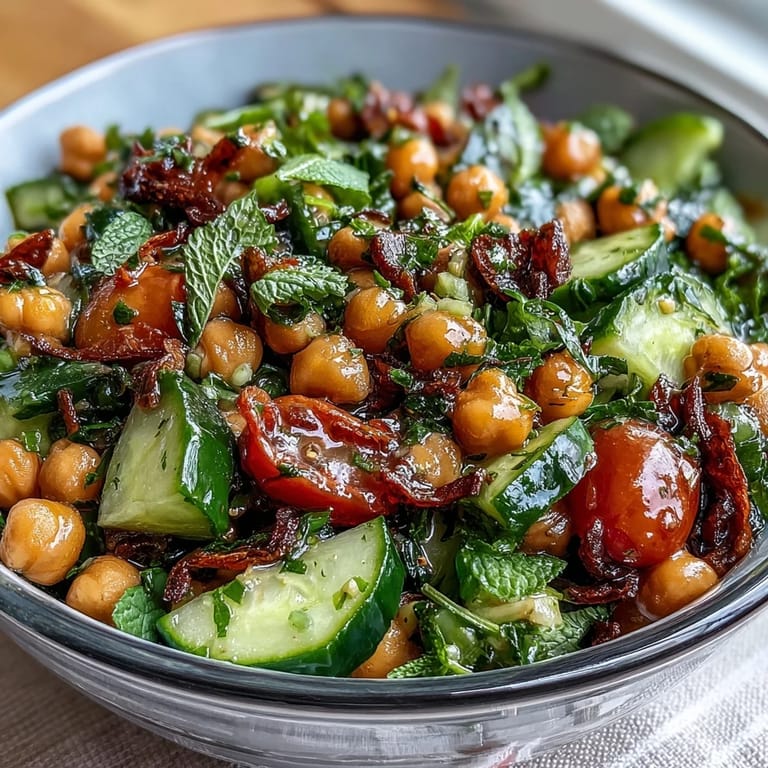
 One afternoon, I was rummaging through my pantry looking for something quick and satisfying when I spotted a can of chickpeas gathering dust next to the olive oil. My garden cucumbers were at their peak, so I grabbed a few along with some cherry tomatoes and thought, why not just make something fresh right now? Fifteen minutes later, I had this vibrant salad that tasted nothing like the sad desk lunches I'd been packing all summer. That moment taught me that the simplest ingredients, when combined with intention and a good squeeze of lemon, can feel completely restaurant-worthy.
I brought this to a potluck where everyone was expecting heavy casseroles, and somehow it disappeared before the main course even finished. A friend who claimed to hate salads came back for seconds, which told me everything about how the lemon vinaigrette does the real work here. That's when I realized a good salad isn't about proving you eat healthy—it's about making something so good that people forget to judge it.
Ingredients
- Chickpeas (1 can, 15 oz): These little legumes are your protein anchor, bringing substance without weight; rinse them thoroughly to remove excess sodium and that starchy film that nobody really enjoys.
- English cucumber (1 large, diced): The watery crunch here balances everything, so don't skip the English variety—they have fewer seeds and a cleaner flavor than regular ones.
- Cherry tomatoes (1 cup, halved): They add sweetness and color while staying structurally sound longer than sliced tomatoes would.
- Red onion (1/4 small, finely diced): A little sharpness cuts through the richness of the olive oil and keeps your palate interested.
- Fresh parsley (1/4 cup, chopped): This is where brightness comes from—don't use dried; it completely changes the character of the dish.
- Fresh mint leaves (1/4 cup, chopped, optional): If you include this, it transforms the salad into something almost transcendent, though it's not strictly necessary.
- Extra virgin olive oil (3 tbsp): Quality matters here since it's tasting raw; cheap oil will remind you it exists, good oil will disappear into the background gracefully.
- Freshly squeezed lemon juice (2 tbsp): Bottled juice tastes like punishment compared to fresh; spend the thirty seconds squeezing a real lemon.
- Lemon zest (1 tsp): This adds complexity that plain juice alone cannot deliver, so find a microplane and use it.
- Dijon mustard (1 tsp): The emulsifier that makes the vinaigrette cling to every ingredient instead of pooling at the bottom.
- Honey or maple syrup (1/2 tsp, optional): Just enough sweetness to round out the acid without making this taste like dessert.
- Sea salt and black pepper (1/2 tsp salt, 1/4 tsp pepper): Season as you taste rather than defaulting to these amounts; everyone's palate is different.
Tired of Takeout? 🥡
Get 10 meals you can make faster than delivery arrives. Seriously.
One email. No spam. Unsubscribe anytime.
Instructions
- Gather your vegetables and give them a gentle introduction:
- In your largest bowl, combine the drained chickpeas, diced cucumber, halved tomatoes, finely diced red onion, chopped parsley, and mint if you're using it. There's no cooking here, just assembly, so take your time chopping and let yourself notice how good everything smells together.
- Build your vinaigrette with intention:
- In a separate small bowl or jar, whisk together the olive oil, fresh lemon juice, lemon zest, Dijon mustard, honey if using it, salt, and pepper until the mixture emulsifies and turns slightly creamy. If you're using a jar, just cap it and shake vigorously for about thirty seconds—the action is the same, just louder.
- Marry everything together gently:
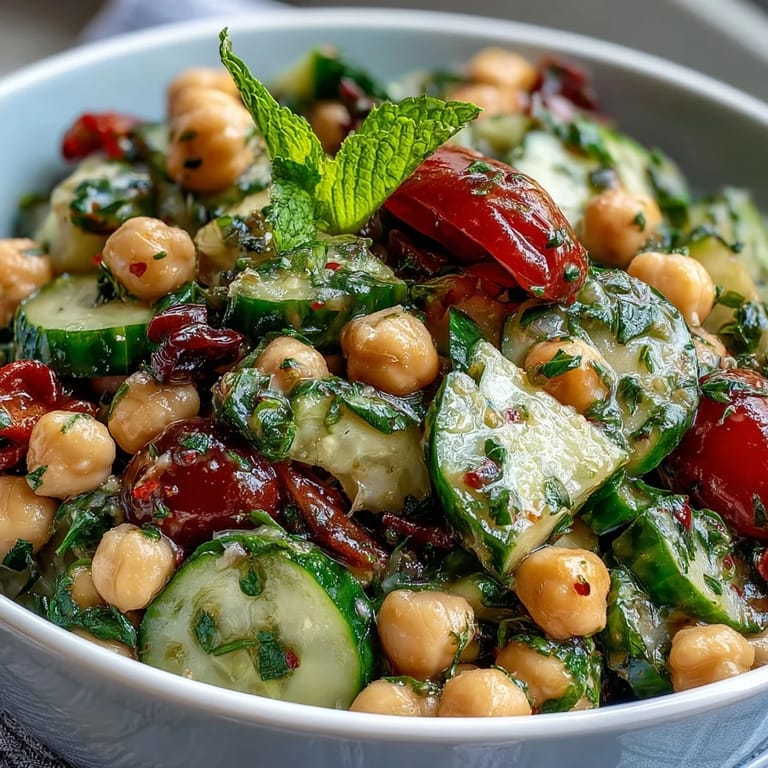
- Pour the vinaigrette over your vegetables and toss with enough motion to coat everything evenly, but not so aggressively that you bruise the delicate herbs or break apart the tomatoes. You're looking for every piece to glisten slightly.
- Taste and recalibrate:
- Before serving, steal a piece of cucumber with some chickpea attached and taste it honestly. Does it need more salt, more lemon, more mustard? Trust what your mouth tells you rather than what the recipe suggested.
- Decide your timing:
- You can serve this immediately while everything is cold and crisp, or refrigerate it for up to two hours to let the flavors become more integrated. Both are right; it just depends on what you're after.
 Pin It
 My grandmother tasted this once and said it was the kind of salad you could eat every day without getting tired of it, which coming from someone who grew up on mayonnaise-heavy everything, felt like the highest compliment. Now whenever someone asks what I'm bringing to a gathering, this is my answer.
Why This Salad Works as Both Lunch and a Side
There's something almost magical about how chickpeas transform a vegetable situation into a complete meal without any pretense. On their own, this is substantial enough that you won't be hungry again in two hours, but it's light enough that you'll actually want to move afterward. The Mediterranean flavors mean it pairs with almost anything—grilled fish, roasted chicken, crusty bread, or just eaten alone standing at the counter because you couldn't wait to sit down.
Storage and Meal Prep Wisdom
I learned the hard way that assembled salad becomes sad salad around hour five, so now I keep my components separate when I'm prepping for the week. The vinaigrette actually tastes better after a day or two once the flavors have gotten to know each other, so make that ahead if you want. The vegetables hold up beautifully in the refrigerator for three to four days, which means you can assemble fresh portions every time you need lunch without any waste or regret.
How to Make This Your Own
The beauty of this salad is that it's flexible enough to welcome almost any addition without losing its identity. Crumbled feta cheese transforms it into something richer if you're not vegan, while fresh dill or basil can replace the parsley if that's what's growing in your garden. Some people add a handful of pumpkin seeds for crunch, or swap the cherry tomatoes for roasted red peppers if that's what they have on hand, and honestly, all of those choices work beautifully.
- If you're serving this to people who are skeptical about salad, lead with how good it smells rather than defending its nutritional content.
- Make extra vinaigrette because it's excellent on almost everything else and stores for a week in the refrigerator.
- Don't skip the lemon zest—it's the detail that makes people ask what makes this taste so different from other salads.
 Pin It
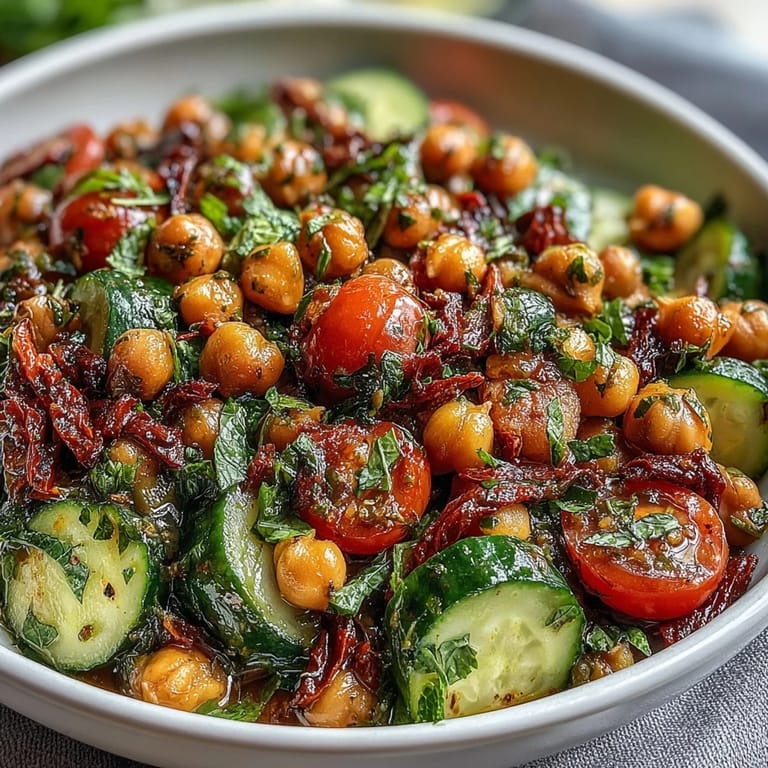
 This salad has become my answer to the question of what to eat when you want something good but don't want to spend your whole evening cooking. It's proof that simple and excellent aren't mutually exclusive.
Recipe FAQs
- → How do I prepare the lemon vinaigrette?
Whisk together extra virgin olive oil, fresh lemon juice, lemon zest, Dijon mustard, honey or maple syrup (optional), sea salt, and black pepper until well emulsified.
- → Can I make this salad ahead of time?
Yes, keep the dressing separate and toss with the salad just before serving for optimal freshness and texture.
- → What herbs complement this salad best?
Fresh parsley and mint add brightness, but dill or basil can be substituted according to preference.
- → Is this salad suitable for vegan and gluten-free diets?
Yes, the salad’s ingredients are naturally vegan and gluten-free; just omit honey for strict vegan compliance.
- → Can I add protein to this dish?
Consider serving alongside grilled chicken or fish, or enjoy it as a protein-packed vegetarian option thanks to the chickpeas.