 Pin It
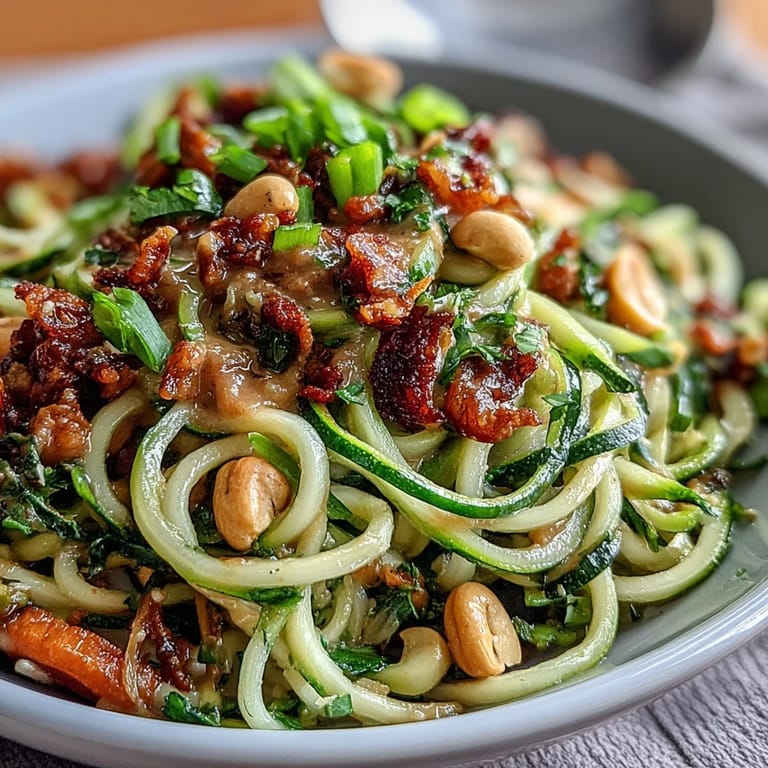
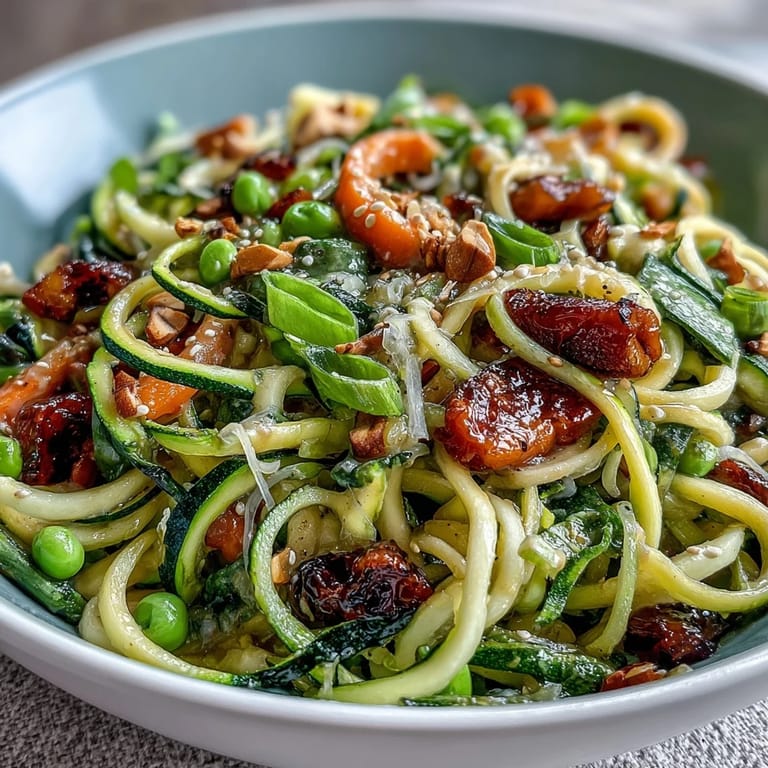
 One Tuesday afternoon, I stood in my kitchen staring at four zucchinis I'd impulse-bought at the farmers market, wondering what possessed me to think I could use them all before they turned soft. My spiralizer had been gathering dust for months, but something about the vibrant bell peppers next to them sparked an idea—what if I stopped overthinking and just made something fresh and fast? That's when this peanut sauce stir-fry was born, and honestly, it's become the dish I reach for when I want something that tastes indulgent but leaves me feeling light.
I made this for my sister during a surprise lunch visit, and I watched her twirl those zucchini noodles on her fork like she was eating actual pasta—that little moment of seeing someone relax into food they thought they'd have to compromise on stuck with me. She kept reaching for more peanuts and asking if I'd added something special, and when I told her the whole thing was basically vegetables and natural peanut butter, her expression shifted. Sometimes the best cooking moments aren't about impressing people with complicated techniques; they're about proving that simple ingredients handled with care can be genuinely satisfying.
Ingredients
- Zucchini: Four medium ones spiralized into noodles that mimic pasta's texture without any of the heaviness—look for firm, smaller zucchinis because they have fewer seeds and less water.
- Red bell pepper and carrot: These bring sweetness and crunch that balance the savory peanut sauce, and their color makes the whole dish look alive.
- Snap peas and green onions: The snap peas stay crisp if you don't overcook them, and green onions add a bright finish that ties everything together.
- Natural peanut butter: The creamy base of your sauce—use the kind with just peanuts and salt, nothing else.
- Rice vinegar and lime juice: These create the tangy brightness that keeps the sauce from feeling heavy, and together they're sharper than either would be alone.
- Sesame oil, soy sauce, ginger, and garlic: This is your flavor architecture, where each ingredient whispers something different but they all speak the same language.
- Maple syrup or honey: A touch of sweetness balances the acid and salt, creating the sauce that makes people ask for the recipe.
Tired of Takeout? 🥡
Get 10 meals you can make faster than delivery arrives. Seriously.
One email. No spam. Unsubscribe anytime.
Instructions
- Get everything prepped:
- Spiralize your zucchini and carrot, slice the bell pepper into thin strips, and trim those snap peas—having everything ready is the only real secret to making this fast. Cold vegetables stir-fry better than room temperature ones, so a quick chill helps if you have time.
- Build your sauce:
- Whisk the peanut butter with soy sauce, rice vinegar, lime juice, maple syrup, and sesame oil until it's smooth, then add minced garlic and ginger. Start with 2 tablespoons of warm water and keep whisking, adding more water a tablespoon at a time until the sauce flows like a loose vinaigrette—it'll cling to the noodles better than something too thick.
- Sear the harder vegetables:
- Heat your skillet or wok over medium-high heat until a drop of water sizzles away, then add the bell pepper, carrot, and snap peas for 2 to 3 minutes, tossing every 30 seconds or so. You want them tender but still snappy when you bite down, not soft and defeated.
- Add the zucchini gently:
- Toss in your spiralized zucchini and cook for just 2 to 3 minutes, stirring more gently than you did with the other vegetables because these noodles break apart if you're rough with them. The goal is heated through, not cooked down into mush.
- Coat everything in sauce:
- Pour that peanut sauce over the vegetables and toss for another minute or so until everything is glossy and warm. The sauce will loosen up a bit from the warmth of the vegetables, which is exactly what you want.
- Finish and serve:
- Transfer to plates while everything is still hot and bright, then scatter chopped peanuts and fresh cilantro on top—those garnishes matter because they add texture and that finishing-touch flavor.
 Pin It
 There was an evening when I made this for myself after a long day, and halfway through eating it I realized I'd stopped scrolling my phone. The combination of creamy and bright, soft noodles and crisp vegetables, the quiet satisfaction of a meal that actually nourished instead of just filling space—it reminded me why cooking for yourself matters. This dish became proof that you don't need complicated recipes or hours at the stove to eat like you care about yourself.
Making the Sauce Your Own
The peanut sauce is forgiving in the best way, which means you can adjust it based on your mood and what's in your pantry. If you like heat, add more red pepper flakes and watch how they bloom in the warmth—if you like it tangy, squeeze in more lime—if you want it richer, add an extra tablespoon of sesame oil. Some people swap the maple syrup for agave or brown sugar, and the sauce shifts slightly but stays fundamentally itself, which is the mark of a well-balanced recipe.
Vegetables as a Canvas
While zucchini is the star here, this dish works with whatever vegetables you have on hand that cook fast—mushrooms if you slice them thin, broccoli florets if you like them slightly charred, even thin strips of cabbage or green beans. The sauce loves vegetables, so the change isn't about replacing something essential but about working with what feels fresh and available that day. I've made this in summer when tomatoes were good and in winter when I had nothing but root vegetables, and both versions felt like exactly the right meal for the moment.
Protein and Staying Power
This recipe is plenty satisfying on its own, but if you need something more substantial, grilled tofu crumbled over the top adds substance without heaviness, or shrimp stirred in at the last second keeps everything light but fills you up better. Chicken works too if you slice it thin and let it warm through for just a minute in the sauce—the point is the vegetables stay the hero, the protein is just there to make the meal stick with you longer.
- Nut-free versions work beautifully with sunflower seed butter or tahini, which give you that same creamy base with different flavor notes.
- If you're meal-prepping, keep the sauce separate from the vegetables and noodles until you're ready to eat so nothing gets waterlogged.
- Leftovers are breakfast material—cold the next morning with a fried egg on top if you're hungry, or straight from the container if you're rushed.
 Pin It
 This is the meal I reach for when I want to feel good while eating something that tastes genuinely delicious, and after making it dozens of times, I still find myself twirling those noodles and thinking about how the best food is usually the simplest. Make this when you need proof that healthy doesn't have to taste compromised.
Recipe FAQs
- → How should zucchinis be prepared for this dish?
Zucchinis are spiralized into noodle shapes to provide a light and fresh base that cooks quickly while maintaining texture.
- → Can I substitute peanut butter in the sauce?
Yes, almond or cashew butter can be used as alternatives for a different flavor or to accommodate nut restrictions.
- → What is the best way to cook the vegetables to keep them crisp?
Stir-fry the vegetables briefly over medium-high heat, about 2–3 minutes, to retain their crispness without overcooking.
- → How can I adjust the sauce consistency?
Add warm water a tablespoon at a time to thin the peanut sauce until it reaches a smooth, pourable consistency.
- → Are there suggested protein additions?
Grilled tofu, chicken, or shrimp can be added on top to boost the protein content without altering the core flavors.